Wangari Maathai Biography: Early Life, Personal Life, Age, Family, Education, Career, Awards, Philosophy, Achievements, Legacy, Death, Net Worth
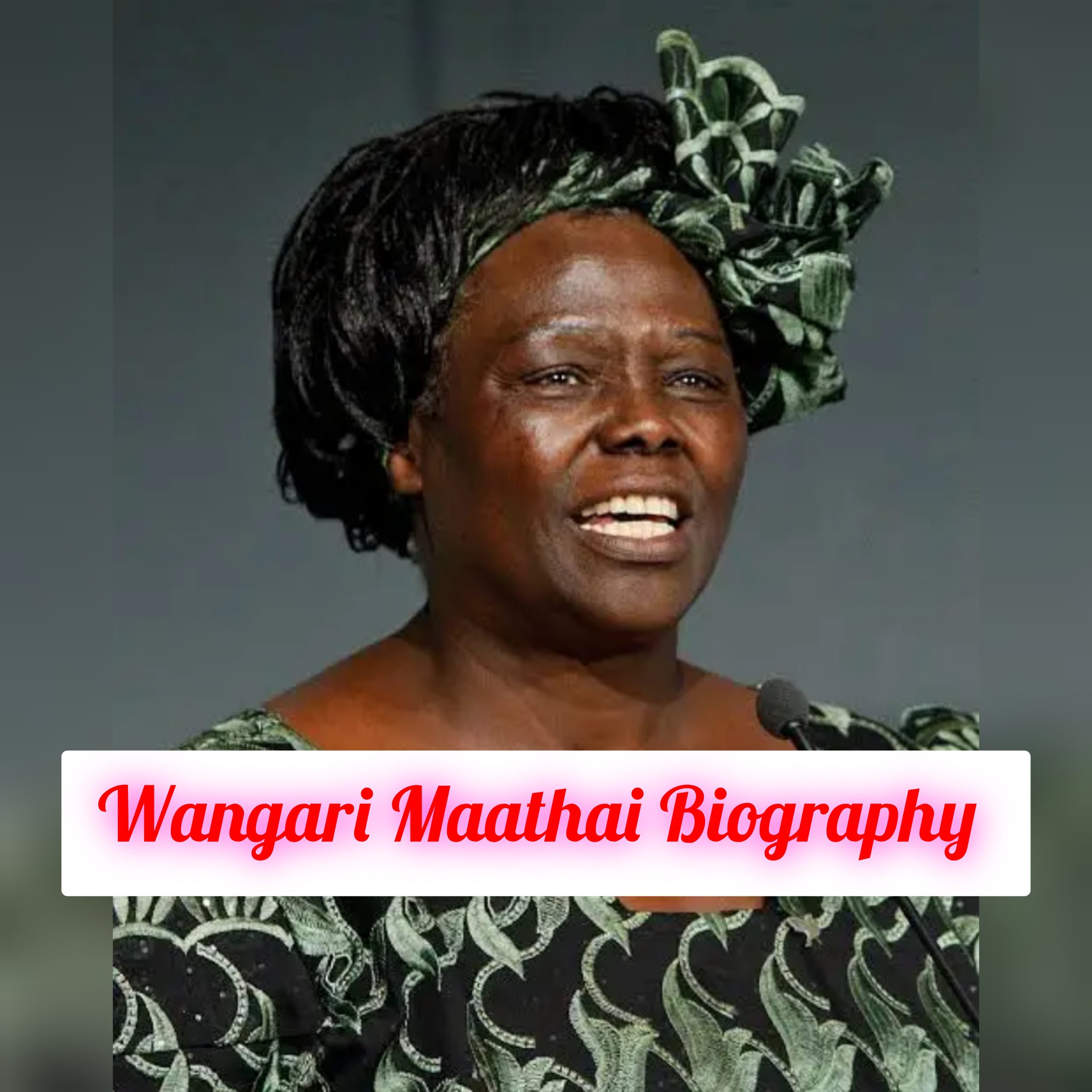
Wangari Maathai Biography
Wangari Maathai remains one of the most influential figures in modern African environmental and political history. Her work connected the health of the land with the dignity of ordinary people, especially rural women, and showed that caring for trees could become a powerful form of civic action. Through decades of steady effort she transformed a simple idea of planting seedlings into a continental movement that linked ecological restoration with democracy, human rights, and women’s empowerment.
Born into a Kikuyu farming family under colonial rule, she rose through education and persistence to become a scientist, professor, activist, parliamentarian, and the first African woman to receive the Nobel Peace Prize. Her life story illustrates how one determined person can change both landscapes and political culture.
Wangari Muta Maathai was born in Ihithe village, Nyeri District, in the central highlands of Kenya, and was Kenyan by nationality.
Wangari Maathai Early Life
Wangari Muta was born on 1 April 1940 in the village of Ihithe, in what was then the Tetu division of Nyeri District in the British colony of Kenya. Her parents were Muta Njugi and Wanjiru Muta. The family belonged to the Kikuyu people, the largest ethnic group in Kenya, and had lived in the fertile central highlands for generations. Her father worked as a tenant farmer, and the household depended on the land for food and livelihood.
Around 1943 the family moved to a white-owned farm near Nakuru in the Rift Valley so that her father could find paid work. Educational opportunities for African children, especially girls, were limited on the farm. In late 1947 Wangari returned with her mother to Ihithe so that she and her brothers could attend school. She began formal education at Ihithe Primary School around the age of eight. Her older brother Nderitu encouraged the family to keep her in school at a time when many girls were expected to remain at home.
At eleven she moved to St. Cecilia’s Intermediate Primary School, a boarding school run by Catholic missionary nuns at the Mathari Mission in Nyeri. There she learned English fluently, converted to Catholicism, and joined the Legion of Mary. She finished at the top of her class in 1956 and gained admission to Loreto High School in Limuru, the only Catholic high school for girls in Kenya at the time. She graduated in 1959 with strong results. The Mau Mau uprising was ongoing during these years, yet the boarding school environment largely sheltered her from the violence that affected many rural families.
In 1960 she was selected for the Kennedy Airlift, a scholarship programme that sent promising East African students to study in the United States. This opportunity opened a new chapter far from the colonial highlands where she had grown up.
Wangari Maathai Personal Life
In April 1966, after returning to Kenya, Wangari met Mwangi Mathai, another Kenyan who had studied in the United States. They married in May 1969 according to both Kikuyu custom and a church ceremony. The couple had three children: a son, Waweru, born in 1969; a daughter, Wanjira, born in December 1971; and another son, Muta, born in 1974.
The marriage came under increasing strain as Wangari’s academic career advanced and her public activism grew. In 1977 the couple separated. Mwangi Mathai filed for divorce in 1979. In court he described her as too strong-minded, too educated, too successful, and too difficult to control. He also accused her of adultery and cruelty. The divorce was granted in his favour. Shortly afterward he demanded that she stop using his surname. She responded by adding an extra letter “a,” becoming Wangari Maathai, a change she retained for the rest of her life.
The divorce proceedings were publicly contested and financially costly. Wangari later accepted a United Nations post that required extensive travel across Africa and was based largely in Lusaka, Zambia. Unable to take the children with her, she arranged for them to live with their father while she visited regularly. They remained with him until the mid-1980s. Despite the personal pain of the separation, she continued to raise her children with care and maintained close relationships with them throughout her life.
Wangari Maathai Age
Wangari Maathai lived from 1 April 1940 until 25 September 2011. She died at the age of 71 in Nairobi Hospital after a prolonged struggle with ovarian cancer. Her death was announced by the Green Belt Movement, and memorial services were held in Kenya and internationally.
Wangari Maathai Education
Her formal education began in rural primary schools in Nyeri District and continued at St. Cecilia’s Intermediate Primary School and Loreto High School in Limuru. In 1960 she travelled to the United States under the Kennedy Airlift programme. She enrolled at Mount St. Scholastica College (now Benedictine College) in Atchison, Kansas, where she majored in biology with minors in chemistry and German. She earned a Bachelor of Science degree in biological sciences in 1964.
She then moved to the University of Pittsburgh, where she completed a Master of Science degree in biological sciences in 1966. Her studies there introduced her to practical environmental concerns, including efforts to reduce air pollution in the city. After returning to Kenya she faced initial difficulties finding academic work, partly because of gender and ethnic bias. She eventually joined the Department of Veterinary Anatomy at the University College of Nairobi as a research assistant.
In 1967 she received a scholarship to pursue doctoral studies in Germany under a partnership between the University of Nairobi and the University of Giessen. She studied at Giessen and at Ludwig Maximilian University of Munich before returning to Nairobi. In 1971 she was awarded a Ph.D. in veterinary anatomy from the University of Nairobi for her research on the development of the male bovine gonad. She became the first woman in East and Central Africa to earn a doctorate. Her academic career continued at the same university, where she rose to senior lecturer, department chair, and associate professor, again the first woman to hold those positions in the region.
Wangari Maathai Career
Academic Work and Early Civic Engagement
After completing her doctorate Wangari taught veterinary anatomy at the University of Nairobi. She became chair of the Department of Veterinary Anatomy in 1976 and associate professor in 1977. During these years she campaigned for equal benefits for women staff at the university and pressed for the academic staff association to gain stronger collective bargaining rights. Many of the improvements she sought were eventually achieved.
She also became active in several civic organisations. She served as director of the Nairobi branch of the Kenya Red Cross Society in 1973, joined the Kenya Association of University Women, and worked with the Environment Liaison Centre, which supported non-governmental participation in the work of the United Nations Environment Programme based in Nairobi. Through these roles she began to see clearly that environmental degradation was a root cause of poverty and hardship for rural communities.
Founding of the Green Belt Movement
While serving on the National Council of Women of Kenya she listened to rural women describe the growing difficulty of finding firewood, the drying of streams, and the decline of soil fertility. In 1976 she proposed that communities plant trees as a practical response. On 5 June 1977, World Environment Day, members of the council planted seven trees in Kamukunji Park in Nairobi. This event marked the formal start of the Green Belt Movement.
The organisation encouraged women to establish tree nurseries, collect seeds of indigenous species, and plant seedlings on farms, school grounds, and church compounds. Women received a small payment for each seedling that survived. The trees provided fuelwood, fodder, fencing material, and protection for soil and water. Over time the movement expanded beyond Kenya. In 1986 it established a Pan African Green Belt Network that trained people from other countries. By the early twenty-first century the Green Belt Movement and its partners had facilitated the planting of tens of millions of trees across Kenya and neighbouring nations.
Environmental Campaigns and Political Confrontation
As the movement grew, Wangari increasingly confronted government policies that favoured commercial interests over community land and forests. In the late 1980s and 1990s she led public campaigns to protect Uhuru Park in Nairobi from a large commercial development planned by the ruling party and to defend Karura Forest from land allocation. These efforts brought her into repeated conflict with the administration of President Daniel arap Moi. She was arrested, beaten, and publicly denounced. Yet the campaigns succeeded in saving significant public green spaces and drew international attention to the links between environmental protection and democratic rights.
She also worked with other activists on the release of political prisoners and on broader demands for multiparty democracy. In 1992 she participated in a hunger strike and protest at Freedom Corner in Uhuru Park that was violently broken up by police. The events further strengthened her reputation as a fearless advocate.
Parliamentary Service and Government Role
In the December 2002 general elections, after the end of single-party rule, Wangari stood for parliament representing the Tetu constituency. She won with approximately 98 percent of the vote as a candidate of the National Rainbow Coalition. In January 2003 she was appointed Assistant Minister for Environment, Natural Resources and Wildlife in the government of President Mwai Kibaki. She served until November 2005. During this period she continued to press for stronger environmental policies and for the rights of communities dependent on forests and land.
After leaving government she remained active on the international stage. She was appointed Goodwill Ambassador for the Congo Basin Forest Ecosystem and later became a United Nations Messenger of Peace. She co-chaired the Congo Basin Forest Fund and supported global tree-planting campaigns, including the Billion Tree Campaign launched with the United Nations Environment Programme.
Wangari Maathai Family
Wangari was the daughter of Muta Njugi and Wanjiru Muta. She had several siblings, including an older brother named Nderitu who played an important role in encouraging her education. Her marriage to Mwangi Mathai produced three children: Waweru Mathai, Wanjira Mathai, and Muta Mathai. After the divorce the children lived for a period with their father, yet Wangari maintained close contact and later described the experience of balancing public work with motherhood as both demanding and formative.
In her later years she took pride in her grandchildren. One granddaughter, Ruth Wangari, and others are mentioned in family accounts. Wanjira Mathai has continued aspects of her mother’s environmental and leadership work, serving in roles connected to the Green Belt Movement and international environmental organisations. Wangari’s family life, though marked by the pain of divorce and the pressures of public activism, remained a source of personal strength and continuity.
Wangari Maathai Philosophy
Wangari Maathai’s thinking rested on the conviction that the environment, democracy, and human dignity are inseparable. She argued that people cannot protect the natural world unless they feel a sense of ownership and responsibility for it. Tree planting was never merely a technical activity; it was a way for ordinary citizens, especially women, to reclaim agency over their land, their livelihoods, and their future.
She believed that environmental degradation deepens poverty and that poverty in turn accelerates further degradation. Restoring trees, soil, and water therefore served both ecological and social justice goals. She repeatedly emphasised the need for communities to take practical action rather than wait for distant authorities. Her seminars and training programmes taught participants to analyse the causes of local problems and to organise collective responses.
In later writings she explored the spiritual dimensions of this work. Drawing on her Catholic upbringing, Kikuyu traditions that regarded certain trees as sacred, and ideas from other cultures such as the Japanese concept of mottainai (a sense that waste is regrettable), she called for a renewal of values that respect the earth and one another. She insisted that sustainable development requires not only technical solutions but also honesty, service, and a willingness to hold leaders accountable. Democracy, in her view, was essential because only open and participatory systems could ensure responsible stewardship of shared natural resources.
Wangari Maathai Achievements
The most visible achievement of her life is the Green Belt Movement itself. What began as a modest tree-planting project grew into a grassroots network that has trained tens of thousands of people, established thousands of nurseries, and facilitated the planting of more than fifty million trees in Kenya and beyond. The movement demonstrated that environmental restoration can be led by rural women and can generate both ecological and economic benefits.
She broke multiple barriers in education and academia, becoming the first woman in East and Central Africa to earn a doctorate and the first to chair a university department and hold the rank of associate professor in her field. Her election to parliament with an overwhelming majority and her service as assistant minister placed an environmental activist at the centre of national decision-making at a critical moment in Kenya’s democratic transition.
Internationally she helped elevate the understanding that peace, democracy, and environmental sustainability are linked. Her campaigns to protect public forests and parks set precedents for citizen action against land grabbing. Through books, speeches, and the example of the Green Belt Movement she influenced environmental thinking and practice across Africa and around the world.
Wangari Maathai Awards
Wangari Maathai received many honours. The most widely recognised is the 2004 Nobel Peace Prize, awarded for her contribution to sustainable development, democracy, and peace. She was the first African woman and the first environmentalist to receive the prize.
Other significant awards include the Right Livelihood Award in 1984, the Goldman Environmental Prize in 1991, the Hunger Project’s Africa Prize for Leadership in 1991, the Edinburgh Medal in 1993, the Jane Addams Leadership Award in 1993, the Sophie Prize in 2004, the Petra Kelly Prize for Environment in 2004, and the Indira Gandhi Peace Prize in 2006. She was named to the United Nations Environment Programme Global 500 Roll of Honour and received national honours from Kenya, including Elder of the Burning Spear and Elder of the Golden Heart. France awarded her the Legion of Honour and Japan the Order of the Rising Sun. She also received numerous honorary doctorates from universities in Africa, Europe, Asia, and North America.
Wangari Maathai Legacy
Although she died in 2011, the institutions and ideas she created continue to shape environmental and civic work. The Green Belt Movement remains active in Kenya and maintains international partnerships. The Wangari Maathai Institute for Peace and Environmental Studies at the University of Nairobi carries forward research and education that combine ecological science with peace studies and community practice. Her writings, particularly the memoir Unbowed, The Challenge for Africa, and Replenishing the Earth, continue to be read by students, activists, and policymakers.
Her insistence that ordinary people can restore degraded land and demand accountable government has inspired similar movements elsewhere. Annual commemorations, including the fifteenth anniversary of her death observed in 2026, keep her example present in public memory. Schools, forests, and public spaces named in her honour serve as lasting reminders of her work.
Conclusion
Wangari Maathai’s life traced a path from a rural Kenyan village to global recognition, yet she never lost sight of the practical needs of the communities she served. She showed that planting a tree could be an act of hope, resistance, and citizenship. Through science, organisation, and moral courage she linked the survival of forests with the survival of democratic freedoms and the dignity of women. Her achievements stand as evidence that determined, sustained action rooted in local realities can produce lasting change for both people and the planet.
FAQs
What was Wangari Maathai best known for?
She is best known for founding the Green Belt Movement, which mobilised communities especially women to plant tens of millions of trees across Kenya and other African countries, and for becoming the first African woman to win the Nobel Peace Prize in 2004.
Where was Wangari Maathai born?
She was born on 1 April 1940 in the village of Ihithe in Nyeri District in the central highlands of Kenya.
Did Wangari Maathai have children?
Yes. She and her former husband Mwangi Mathai had three children: Waweru, Wanjira, and Muta.
What books did Wangari Maathai write?
She authored several books, including The Green Belt Movement: Sharing the Approach and the Experience, Unbowed: A Memoir, The Challenge for Africa, and Replenishing the Earth: Spiritual Values for Healing Ourselves and the World.
When did Wangari Maathai die?
She died on 25 September 2011 in Nairobi at the age of 71 after a battle with ovarian cancer.
Why did Wangari Maathai receive the Nobel Peace Prize?
The Norwegian Nobel Committee recognised her for a holistic approach to sustainable development that embraced democracy, human rights, and women’s rights, and for her work linking environmental conservation with peace.
What is the Green Belt Movement?
It is the environmental organisation Wangari Maathai founded in 1977. It focuses on tree planting, community empowerment, environmental education, and advocacy for good governance of natural resources.