Chinua Achebe Biography: Age, Personal Life, Family, Early Life, Education, Career, Awards, Philosophy, Achievements, Death, Legacy, Net Worth
Chinua Achebe Biography
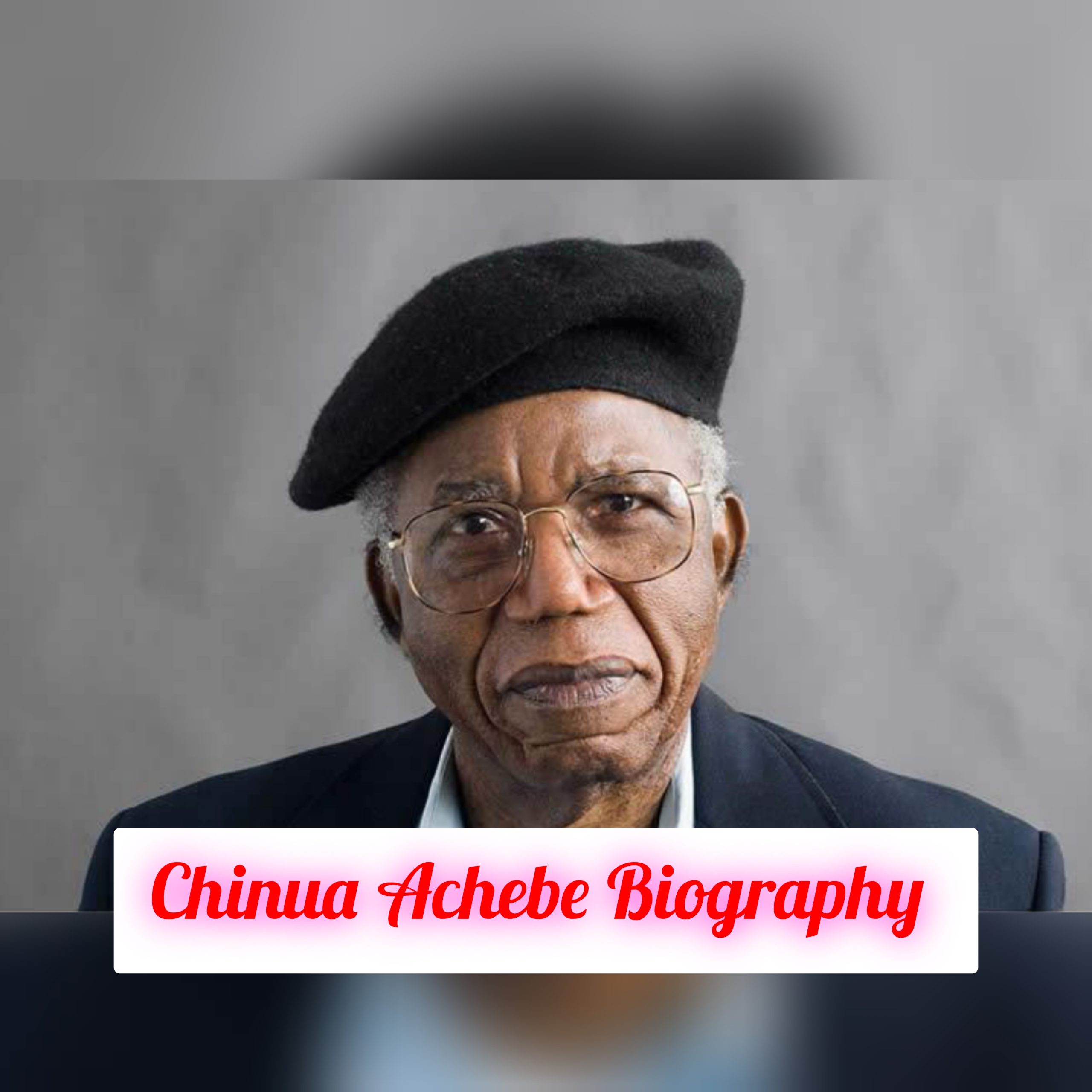
Chinua Achebe stands among the most influential literary figures of the twentieth century. His novels, essays, and poems reshaped how the world understood African societies, culture, and history. Through precise storytelling rooted in Igbo traditions and a clear-eyed examination of colonial disruption, he created works that continue to educate and challenge readers across generations.
His writing combined the rhythms of oral storytelling with the form of the modern novel. This approach allowed him to present African life from within rather than through external filters. The result was a body of work that restored dignity to African narratives and opened pathways for countless writers who followed.
Albert Chinụalụmọgụ Achebe was born in Ogidi, Colonial Nigeria, and held Nigerian nationality.
Chinua Achebe Early Life
Chinua Achebe was born on 16 November 1930 in the Igbo village of Ogidi, then part of Colonial Nigeria and now located in Anambra State in southeastern Nigeria. His full baptismal name was Albert Chinụalụmọgụ Achebe. The name Chinụalụmọgụ means “May God fight on my behalf,” a traditional Igbo prayer for protection. He later shortened it to Chinua and dropped the European name Albert as he matured.
His father, Isaiah Okafo Achebe, worked as a teacher and evangelist for the Church Mission Society. His mother, Janet Anaenechi Iloegbunam, came from a blacksmith family in Awka. She was active in church women’s groups and farmed vegetables. Both parents were early converts to Protestant Christianity, yet they maintained respect for many traditional Igbo practices. This dual environment shaped Achebe’s childhood. He absorbed Christian teachings at home and in school while hearing Igbo folktales, proverbs, and histories from his mother and older sister Zinobia Uzoma.
Achebe was the fifth of six surviving children. His siblings included Frank Okwuofu, John Chukwuemeka Ifeanyichukwu, Zinobia Uzoma, Augustine Ndubisi, and Grace Nwanneka. The family lived at the intersection of two worlds. Mission education discouraged traditional practices, yet village life still featured masquerades, festivals, and storytelling sessions that Achebe later drew upon extensively in his fiction.
Primary schooling began at St. Philips’ Central School in Ogidi. Teachers quickly recognized his sharp intelligence and strong reading ability. He later attended Nekede Central School near Owerri. At age fourteen he gained admission to the prestigious Government College Umuahia, one of the leading secondary schools in West Africa at the time. The school enforced English as the language of instruction and exposed students to a rigorous colonial curriculum. Among his schoolmates was the poet Christopher Okigbo, who became a close friend.
These early years instilled in Achebe both a command of English and a deep attachment to Igbo cultural memory. The tension between the two would become a central theme in his writing. He observed how colonial institutions disrupted traditional authority structures while also providing new tools of literacy and wider communication. This observation stayed with him throughout his life.
Chinua Achebe Personal Life
Chinua Achebe married Christiana Chinwe Okoli, known as Christie, on 10 September 1961. The ceremony took place in the Chapel of Resurrection on the campus of the University of Ibadan. Christie was a student and later an academic who supported Achebe’s work through decades of change, including periods of political upheaval and personal hardship.
The couple built a partnership grounded in mutual respect and shared intellectual interests. Christie later became a professor and remained a steady presence during Achebe’s academic appointments in Nigeria and the United States. Their home life balanced literary ambition with family responsibilities. Achebe valued the stability of marriage and often spoke of the importance of family continuity in Igbo culture.
In 1990 Achebe suffered a serious car accident in Nigeria that left him partially paralyzed and reliant on a wheelchair for the remainder of his life. The injury forced a major adjustment. Christie provided essential support during recovery and the subsequent move to the United States for medical care and academic work. Despite physical limitations, Achebe continued writing, teaching, and speaking with characteristic clarity and resolve.
Achebe maintained strong ties to his Igbo heritage. He received traditional titles and remained connected to Ogidi even while living abroad. Personal integrity guided many of his public decisions. He twice declined national honors from the Nigerian government, citing ongoing problems of governance and corruption that he believed the awards would appear to overlook.
Chinua Achebe Age
Chinua Achebe was born on 16 November 1930. He died on 21 March 2013 in Boston, Massachusetts, at the age of 82. His life spanned the final decades of British colonial rule in Nigeria, the achievement of independence in 1960, the Nigerian Civil War, and the long aftermath of postcolonial challenges. These historical shifts provided both the backdrop and the subject matter for much of his work.
Chinua Achebe Education
Achebe’s formal education began in mission and government schools that mixed Christian instruction with colonial academic standards. At Government College Umuahia he excelled in a demanding environment that prepared students for university and public service.
In 1948 he entered University College Ibadan, Nigeria’s first university and then an affiliate of the University of London. He initially received a scholarship to study medicine. After a short time he switched to English, history, and theology. The change reflected a growing conviction that literature offered a more effective means of addressing the cultural questions that occupied him. The switch cost him the medical scholarship, yet family support and a government bursary allowed him to continue.
At Ibadan he encountered Western novels that portrayed Africans as primitive or comic figures. Works such as Joyce Cary’s Mister Johnson and Joseph Conrad’s Heart of Darkness disturbed him deeply. He recognized that these representations distorted African reality and decided that African writers must tell their own stories. He began contributing essays and short stories to campus magazines, honing a style that mixed clear English prose with Igbo speech patterns and proverbial wisdom.
He graduated in 1953 with a second-class degree. Although disappointed not to achieve first-class honors, he left university with a clear sense of purpose. A brief period of teaching at Merchants of Light School in Oba followed. There he encouraged students to read widely and think independently. In 1954 he joined the Nigerian Broadcasting Service in Lagos, beginning a professional path that combined media work with the development of his literary career.
In 1956 he traveled to London for training at the British Broadcasting Corporation. The trip broadened his technical skills and exposed him to a wider literary community. These educational experiences equipped him with the tools to write fiction that could speak simultaneously to African and international audiences.
Chinua Achebe Career
Broadcasting and Early Writing
After university Achebe joined the Nigerian Broadcasting Service in Lagos as a talks producer. The work required him to craft scripts for oral delivery, sharpening his ear for natural speech and dialogue. He later moved to Enugu as controller and eventually became director of external broadcasting in Lagos. The position involved shaping Nigeria’s voice for international audiences during the transition to independence.
While working in broadcasting he wrote steadily in his spare time. In 1958 Heinemann published his first novel, Things Fall Apart. The book told the story of Okonkwo, a proud Igbo warrior whose life unravels under the pressures of colonial intrusion and internal social change. Written in a spare, proverb-rich English, the novel presented precolonial Igbo society with complexity and humanity. It quickly found readers in Africa and abroad and established Achebe as a major new voice.
The African Trilogy and Subsequent Novels
Things Fall Apart formed the first part of what became known as the African Trilogy. No Longer at Ease appeared in 1960 and followed Okonkwo’s grandson Obi as he navigated the moral compromises of colonial and early independent Lagos. Arrow of God, published in 1964, examined the conflict between traditional religious authority and colonial administration through the figure of the chief priest Ezeulu. Together the three novels traced the long impact of European contact on Igbo communities across generations.
Achebe continued with A Man of the People in 1966, a sharp satire of post-independence political corruption. The novel’s timing proved almost prophetic, appearing just as Nigeria entered a period of military coups. After a long interval he published Anthills of the Savannah in 1987, returning to themes of power, leadership, and the responsibilities of the intellectual in a fictional African state.
Editorial Work and Mentorship
In the early 1960s Achebe became founding editor of the Heinemann African Writers Series. The series made contemporary African fiction available in affordable paperback editions and introduced international readers to writers such as Ngũgĩ wa Thiong’o, Flora Nwapa, and others. Achebe’s editorial judgment helped shape the emerging canon of modern African literature in English. He also co-founded publishing ventures in Nigeria and edited the journal Okike, which provided a platform for new African writing and criticism.
Poetry, Essays, and Children’s Literature
The Nigerian Civil War interrupted novel writing. During the conflict Achebe supported the Biafran cause and served in diplomatic roles. He turned to poetry, producing Beware, Soul Brother in 1971, later reissued as Christmas in Biafra and Other Poems. The poems captured the suffering and moral urgency of the war years.
His essay collections, including Morning Yet on Creation Day (1975), Hopes and Impediments (1988), Home and Exile (2000), and The Education of a British-Protected Child (2009), clarified his views on literature, language, and cultural responsibility. The influential lecture “An Image of Africa: Racism in Conrad’s Heart of Darkness” challenged the continued elevation of Conrad’s novella and argued for the need to confront racist representations in the Western canon.
Achebe also wrote children’s books such as Chike and the River, seeking to provide young African readers with stories that reflected their own environments rather than imported colonial narratives.
Academic Appointments
After the civil war Achebe held research and teaching posts at the University of Nigeria, Nsukka. In the 1970s he spent periods in the United States as a visiting professor. Following the 1990 accident he accepted a long-term appointment at Bard College in New York as the Charles P. Stevenson Professor of Languages and Literature. In 2009 he moved to Brown University as professor of African studies. These roles allowed him to continue mentoring students and writing while managing the physical limitations imposed by his injury.
Chinua Achebe Family
Achebe and Christie raised four children. Their first child, daughter Chinelo, was born in 1962. Twin sons Ikechukwu and Chidi followed in 1964 and 1967. Their youngest child, daughter Nwando, arrived in 1970 after the civil war. The children grew up in an environment that valued education, cultural awareness, and critical thought. Achebe and Christie paid close attention to the materials their children encountered in school, concerned about biased portrayals of Africa.
Nwando Achebe became a historian specializing in African history and gender studies and has held a professorship at Michigan State University. Chidi Chike Achebe pursued medicine and later became a healthcare executive. The family maintained strong bonds across continents. Achebe’s siblings remained part of his extended network, and traditional Igbo family obligations continued to matter even during long periods abroad.
The household reflected the same cultural synthesis that marked Achebe’s writing. Christian and Igbo values coexisted, and storytelling remained a living practice. In later years the family expanded to include grandchildren, extending the generational continuity that Achebe regarded as essential to cultural survival.
Chinua Achebe Philosophy
Achebe held that literature carries moral and educational weight. He rejected the idea of art for art’s sake, arguing instead that the writer in a postcolonial society has a duty to help people understand their history and regain self-respect. In essays such as “The Novelist as Teacher” he stated that his goal was to show African readers that their past was not a long night of savagery from which Europeans delivered them. Traditional societies possessed sophisticated systems of law, philosophy, and art. The writer’s task was to recover and present that complexity.
He defended the use of English as a practical language that could reach a wide audience while insisting that African writers must transform it to carry African experience. Proverbs, folktales, and the cadences of Igbo speech entered his prose as deliberate stylistic choices. Language, for Achebe, was never neutral. It either confirmed or challenged existing power relations.
On colonialism he maintained a nuanced position. He documented its destructive effects on social cohesion, religious authority, and individual dignity. At the same time he acknowledged that colonial institutions introduced administrative structures and educational opportunities that later generations could adapt. His final memoir, There Was a Country, reflected on both the failures of postcolonial leadership and certain practical achievements of the colonial period. The balance was never simple endorsement or simple rejection. It was an insistence on accurate historical reckoning.
Achebe also emphasized the importance of cultural confidence. Loss of dignity, he believed, was among the worst consequences of colonial rule. Literature could help restore it by presenting African characters as fully human agents rather than as background figures in European stories. This conviction guided both his fiction and his criticism.
Chinua Achebe Achievements
Achebe’s most enduring achievement is the creation of a body of fiction that made African interior life visible to a global readership. Things Fall Apart has sold millions of copies and been translated into more than fifty languages. It remains a standard text in schools and universities worldwide. The African Trilogy as a whole provided a multi-generational account of cultural encounter that influenced the development of postcolonial studies.
Through the African Writers Series he helped establish a publishing infrastructure that allowed African authors to reach international markets. His critical essays, particularly the Conrad lecture, forced a reexamination of canonical Western texts and their treatment of race and empire. As a teacher and mentor he shaped successive generations of writers and scholars in Africa and the diaspora.
His work demonstrated that the novel form could accommodate African oral traditions without sacrificing literary seriousness. This formal innovation expanded the possibilities of English-language fiction and encouraged writers from other formerly colonized regions to draw on their own cultural resources.
Chinua Achebe Awards
Achebe received numerous literary and cultural honors. Early recognition included the Margaret Wrong Memorial Prize in 1959 for Things Fall Apart and the Jock Campbell New Statesman Award in 1965 for Arrow of God. He won the Commonwealth Poetry Prize in 1972 for Beware, Soul Brother.
In 1979 he received the Nigerian National Merit Award, the country’s highest honor for intellectual achievement. Later international awards included the St. Louis Literary Award in 1999, the Peace Prize of the German Book Trade in 2002, the Man Booker International Prize in 2007 for lifetime achievement, and the Dorothy and Lillian Gish Prize in 2010. He also received more than thirty honorary doctorates from universities around the world.
He was offered the national honor of Commander of the Federal Republic of Nigeria on two occasions and declined both times, explaining that he could not accept recognition from a government that had not adequately addressed fundamental problems of leadership and social justice.
Chinua Achebe Current News
In July 2026 Anambra State Governor Chukwuma Soludo unveiled a statue of Chinua Achebe at the Ugwunwasike Roundabout in Ogidi, the author’s hometown. The monument marked thirteen years since Achebe’s death and affirmed the continued local and national recognition of his cultural importance. The event drew attention to ongoing efforts to honor literary figures through public art and educational initiatives in southeastern Nigeria.
Chinua Achebe Legacy
Achebe’s influence extends far beyond the sales figures of his books. He demonstrated that African writers could claim the novel as their own instrument and use it to correct historical distortions. Writers across the continent and in the diaspora have cited him as a foundational presence. Academic fields such as postcolonial studies, African literature, and world literature continue to engage with his fiction and essays.
His insistence on cultural self-respect remains relevant in debates about representation, language choice, and historical memory. The annual Chinua Achebe Literary Festival and related anthology projects keep his name active among younger writers. Educational curricula in many countries treat Things Fall Apart as essential reading, ensuring that new generations encounter his vision of a complex, dignified African past.
Achebe rejected the title “father of modern African literature,” preferring to see himself as one participant in a larger cultural recovery. Yet the scale of his impact makes the designation understandable. He showed that storytelling could serve both artistic and restorative purposes, and he did so with a clarity and moral seriousness that continue to set a high standard.
Conclusion
Chinua Achebe’s life and work form a coherent response to the historical forces that shaped twentieth-century Africa. Born into a society already experiencing colonial transformation, he used literature to examine that transformation with honesty and depth. His novels restored agency and complexity to African characters. His essays demanded that readers confront uncomfortable truths about representation and power. His editorial and teaching efforts created space for other voices.
The result is a legacy that combines artistic achievement with cultural responsibility. Achebe wrote so that African readers might recognize themselves and so that the wider world might see Africa more accurately. That dual purpose continues to give his work lasting force. In an age still negotiating the aftereffects of empire and the challenges of cultural confidence, his example remains instructive and necessary.
FAQs
What is Chinua Achebe’s full name?
His full baptismal name was Albert Chinụalụmọgụ Achebe. He later used Chinua Achebe professionally.
Where was Chinua Achebe born?
He was born in Ogidi, in what is now Anambra State, southeastern Nigeria, on 16 November 1930.
What is Chinua Achebe’s most famous book?
Things Fall Apart, published in 1958, is his most widely read and studied work.
Did Chinua Achebe win the Nobel Prize?
No. Despite frequent speculation and widespread recognition, he never received the Nobel Prize in Literature. He did receive the Man Booker International Prize in 2007 for lifetime achievement.
Who was Chinua Achebe’s wife?
He married Christiana Chinwe Okoli, known as Christie, in 1961. They remained married until his death in 2013.
How many children did Chinua Achebe have?
He and Christie had four children: Chinelo, Ikechukwu, Chidi, and Nwando.
What was Chinua Achebe’s role during the Nigerian Civil War?
He supported the Biafran side, served in diplomatic capacities, and later wrote poetry and a memoir reflecting on the conflict.
Why did Chinua Achebe decline national honors?
He declined the Commander of the Federal Republic honor on two occasions because he believed the Nigerian government had not sufficiently addressed issues of corruption and poor leadership.
When and where did Chinua Achebe die?
He died on 21 March 2013 in Boston, Massachusetts, at the age of 82. He was later buried in Ogidi.