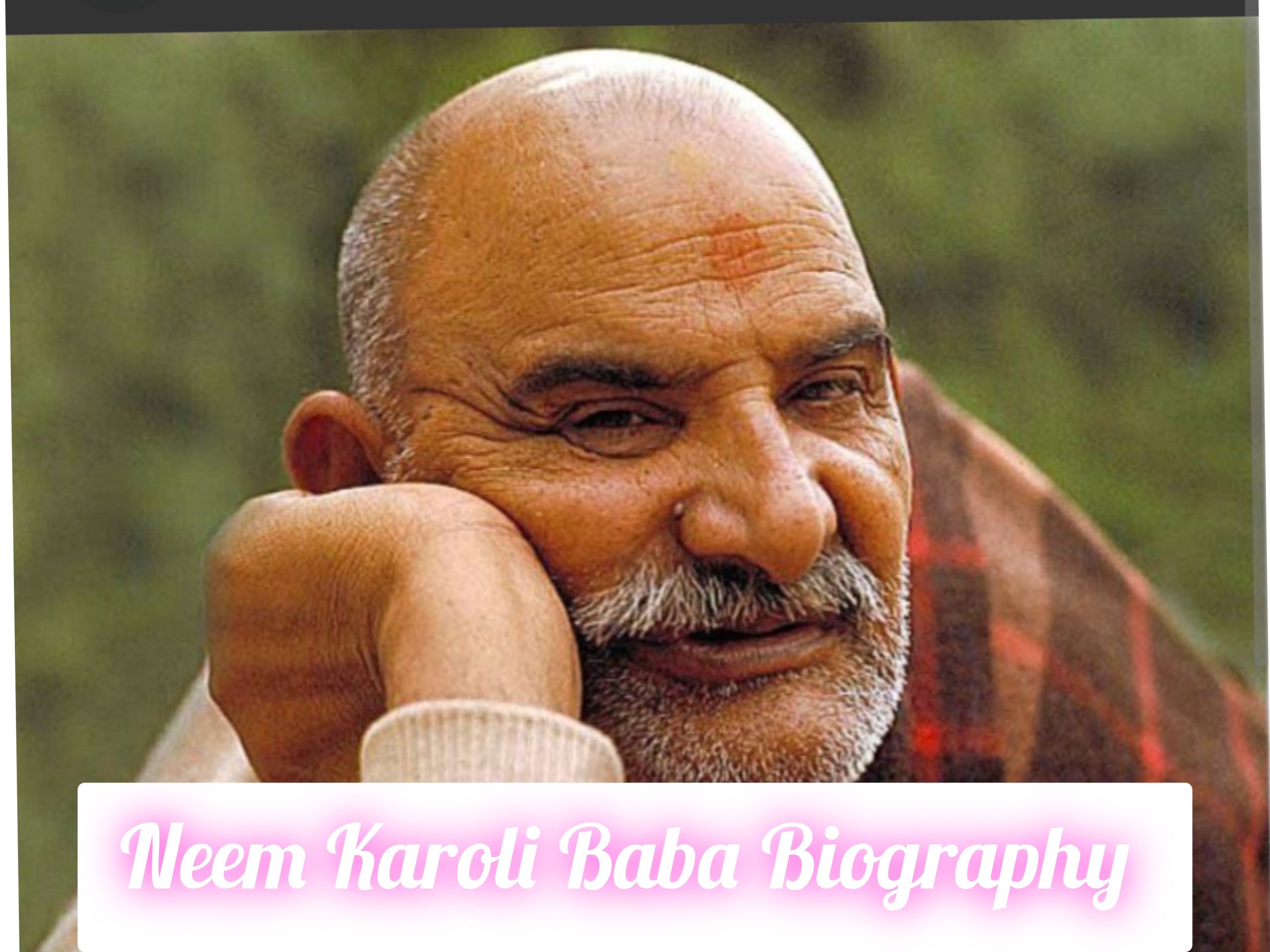
Neem Karoli Baba: Complete Biography of the Indian Spiritual Teacher and Hanuman Devotee
Neem Karoli Baba, born Lakshman Narayan Sharma (also recorded in accounts as Laksman Narayan Sharma or Lakshmi Narayan Sharma), was an Indian Hindu spiritual teacher and devotee of the deity Hanuman. He lived from around 1900 until 11 September 1973 and became known to followers as Maharaj-ji. His life centered on simple devotion, selfless service, and the path of bhakti yoga.
He spent years as a wandering sadhu across northern India before establishing ashrams that drew seekers from India and abroad. His presence and guidance left a lasting mark on many, including Western disciples who carried his message of love and service into wider circles. This biography draws on available historical accounts and consistent reports from reliable sources to present a clear picture of his life and influence.
Neem Karoli Baba Early Life
Neem Karoli Baba was born around 1900 in the village of Akbarpur in Uttar Pradesh, India. Most detailed local and devotee accounts place the village in what is now Firozabad district, though some references note variations in administrative boundaries over time. He belonged to a wealthy Brahmin family. His father was Durga Prasad Sharma, a landowner, and his mother was Kausalya Devi according to traditional family accounts preserved by devotees. Exact records of his birth date remain approximate, with some traditional sources linking it to the Shukla Paksha Ashtami period in September, but no precise calendar date is universally verified.
Uttar Pradesh, his state of origin, is a large and culturally rich region in northern India. It has long been a center of Hindu spiritual traditions, with deep connections to the stories of Rama, Hanuman, and other figures from the Ramayana. The area around Akbarpur and nearby districts formed part of the historical North-Western Provinces under British rule at the time of his birth. Village life there typically involved agriculture, local commerce, and strong family and religious customs. Brahmin families of means often held land and played roles in community affairs.
As a child, he experienced the early loss of his mother when he was about eight or nine years old. In keeping with customs of the era, his parents arranged his marriage at the age of eleven to a girl from a Brahmin family, identified in some accounts as Ram Beti or Shubh Shree Ram Beti from a nearby village. Shortly after the marriage, he left home to live as a wandering sadhu. He traveled through parts of northern India, including areas of Rajasthan and Gujarat. During periods of intense spiritual practice, he was known by various local names such as Lakshman Das, Handi Wallah Baba, Tikonia Walla Baba, and Tallaiya Baba (or Talaiya Baba) while performing austerities near a pond in the Vavania or Bhavania area of Gujarat’s Morbi region.
At his father’s request, he returned home after a number of years and lived for a time as a householder. He and his wife had two sons and one daughter. Family accounts name the sons Aneg Singh Sharma and Dharma Narayan Sharma, and the daughter Girija. Even while fulfilling family responsibilities, he maintained a strong inner spiritual focus. He left home again later, around the late 1950s according to some timelines, to resume a more public life of wandering and teaching.
Neem Karoli Baba Career
His public spiritual work unfolded through wandering, quiet guidance, and the gradual establishment of places of worship rather than formal institutions or published teachings. He emphasized devotion to Hanuman and the simple practice of remembering God while serving others. He did not deliver structured lectures or write books. Instead, he taught through presence, short remarks, stories, and personal example.
Neem Karoli Baba Wandering Years and Acquisition of His Name
During his travels as a sadhu, an incident near the village of Neeb Karori (also spelled Neem Karoli or Neem Karori) in Farrukhabad district of Uttar Pradesh gave him the name by which he became widely known. Accounts describe him boarding a train without a ticket. When the conductor had him removed near the village, the train would not move despite repeated efforts. Local people and officials, recognizing something unusual, persuaded him to board again after certain conditions were accepted, including better treatment of sadhus and the eventual building of a station. From that association with the place, he came to be called Neem Karoli Baba or Neeb Karori Baba. In Vrindavan he was sometimes known as Chamatkari Baba, reflecting stories of unusual occurrences that devotees attributed to him.
He continued moving between locations in northern India, living simply and focusing on the welfare of those around him. He showed particular care for feeding people and treating everyone with equal regard, without distinction of social background.
Neem Karoli Baba Establishment of Ashrams and Temples
In the 1950s and 1960s he guided the creation of temples and ashrams. An early effort was the Hanumangarh temple on the Manora hillside. The Kainchi Dham ashram near Nainital in the Kumaon hills of what is now Uttarakhand was established in 1964. It began with a platform associated with earlier sadhus and grew into a Hanuman temple and residential complex. He spent significant time there in later years, especially during the summer months. A major annual gathering, the Kainchi Dham Bhandara or Mela, is held around 15 June to mark the foundation, drawing large numbers of devotees.
Another important center developed in Vrindavan. Additional temples and ashrams associated with him appeared in places such as Bhumiadhar, Kakrighat, Hanumangarhi, Rishikesh, Shimla, Delhi, Lucknow, Kanpur, and the original Neem Karoli village area. Over time, more than one hundred temples were constructed in his name by devotees. These sites focused on simple worship of Hanuman, communal meals, and the practice of remembrance and service.
He never stayed permanently in one location for long periods. His approach remained informal. He encouraged people to love everyone, serve everyone, and remember God. He stressed speaking the truth and treating all beings with care. Feeding the hungry was a recurring practical expression of his guidance. Disciples later described his core message in phrases such as “Love everyone, serve everyone, remember God.”
Neem Karoli Baba Personal Life
Neem Karoli Baba balanced periods of householder life with the freedom of a wandering sadhu. After returning home at his father’s urging, he lived with his wife and raised two sons and a daughter. Family connections continued even after he resumed wider travels. Some family members and close associates later helped maintain certain ashrams and temples.
He treated men and women with the same openness and affection, which was notable in the social context of his time. Devotees of varied backgrounds sat with him without rigid hierarchy. He lived simply, often wearing a blanket, and showed little interest in personal possessions or formal recognition. Accounts from those close to him describe a personality that combined playfulness, directness, and deep compassion. He addressed people in familiar, caring terms and focused attention on practical acts of kindness rather than elaborate rituals.
His health declined in the early 1970s. He experienced chest pains and consulted a specialist in Agra. While traveling by night train toward Kainchi, he became seriously ill after disembarking at Mathura. He was taken to a hospital in Vrindavan, where he slipped into a diabetic coma and died at approximately 1:15 a.m. on 11 September 1973. His last repeated words, according to those present, were “Jaya Jagadish Hare.” His samadhi shrine was established at the Vrindavan ashram, and his ashes were also connected with Kainchi Dham.
Neem Karoli Baba Teachings and Philosophy
The heart of his guidance was bhakti yoga expressed through everyday conduct. He taught that love should extend to everyone without calculation, that service should be offered freely, and that the mind should remain connected to God through constant remembrance, often of the name of Ram or Hanuman. He valued truthfulness highly and saw the purification of the heart as essential. Feeding people, caring for the poor, and treating others as manifestations of the divine formed practical applications of these ideas.
He did not create a formal system or lineage of succession in the conventional sense. People were encouraged to find their own way while holding to the principles of love, service, and remembrance. His influence reached Western seekers in the late 1960s and early 1970s. Among the better-known disciples were Ram Dass (Richard Alpert), Bhagavan Das, Krishna Das, Jai Uttal, Larry Brilliant, Lama Surya Das, and others who later shared stories and practices associated with him. Ram Dass’s book Be Here Now and subsequent writings helped introduce his presence to a broader audience outside India.
Stories of unusual insight or events circulated among devotees, yet he himself pointed attention back to simple devotion and service rather than displays. He saw the entire world as one family and urged people not to harm the heart of another.
Neem Karoli Baba Influence Beyond India and Notable Connections
After his physical departure, interest in his life and message continued to grow. Steve Jobs traveled to India in 1974 hoping to meet him, only to learn that he had died the previous year. Jobs later spoke of the impact of that period of searching on his thinking about simplicity and intuition. Mark Zuckerberg visited Kainchi Dham years later, following advice connected to Jobs. Other public figures have also visited the ashrams. In India, devotees from many walks of life, including public personalities, have maintained connections with the sites associated with him.
Organizations inspired by his example include the Seva Foundation, co-founded by Ram Dass and Larry Brilliant, which has worked in international health, and the Love Serve Remember Foundation, which preserves and shares materials related to his teachings. Meditation centers and temples continue to operate in India and abroad under the guidance of devotees.
Neem Karoli Baba Ashrams and Continuing Presence
Kainchi Dham remains one of the most visited sites, set in the hills near Nainital with a river nearby and a focus on Hanuman worship. Vrindavan holds his primary samadhi. Other centers continue the practices of communal feeding, kirtan, and quiet remembrance. Annual gatherings, especially the June event at Kainchi, bring large numbers of people together for worship and shared meals. The emphasis stays on accessibility and practical devotion rather than elaborate organization.
Neem Karoli Baba Awards
No formal secular awards or official honors from governmental bodies are recorded in available historical accounts. Recognition of his life has come through the sustained devotion of followers, the temples built in his name, and the ongoing influence of his simple message on individuals and communities.
Conclusion
Neem Karoli Baba’s life illustrates a path of quiet spiritual authority rooted in devotion to Hanuman, love for all people, and practical service. From his birth in a Brahmin family in Akbarpur, Uttar Pradesh, through years of wandering, family responsibilities, and the founding of ashrams, he consistently pointed toward inner remembrance and outer kindness. His death in 1973 did not end the reach of his example. The places associated with him continue to welcome seekers, and the core instruction to love, serve, and remember God remains accessible to anyone willing to practice it. His story offers a clear reminder that profound influence can arise from simplicity, presence, and genuine care for others.
FAQs
Who was Neem Karoli Baba and what was his full name?
Neem Karoli Baba was an Indian Hindu guru and Hanuman devotee known to followers as Maharaj-ji. His birth name was Lakshman Narayan Sharma, with slight variations in spelling appearing across sources. He lived approximately from 1900 to 1973.
Where was Neem Karoli Baba born?
He was born in Akbarpur village in Uttar Pradesh, India. Consistent local accounts associate the village with the Firozabad district area.
What were the main teachings of Neem Karoli Baba?
He emphasized loving everyone, serving everyone, remembering God, speaking the truth, and feeding the hungry. His approach centered on bhakti and practical kindness rather than complex philosophy.
When and where did Neem Karoli Baba die?
He died on 11 September 1973 in a hospital in Vrindavan, India, after entering a diabetic coma while traveling.
What is Kainchi Dham and its connection to Neem Karoli Baba?
Kainchi Dham is an ashram and Hanuman temple complex near Nainital in Uttarakhand that he established in 1964. It became one of his primary residences in later years and remains a major center for devotees.
Did Neem Karoli Baba have a family?
Yes. He was married at a young age according to custom and later had two sons and one daughter while living as a householder for a period.
How did Neem Karoli Baba get his name?
The name arose from an association with the village of Neeb Karori or Neem Karoli in Uttar Pradesh following an incident involving a train that would not move after he was asked to leave it.
Are there ashrams dedicated to Neem Karoli Baba today?
Yes. Active centers exist at Kainchi Dham, Vrindavan, and numerous other locations in India, along with related centers abroad maintained by devotees.