Abubakar Tafawa Balewa Biography: Early Life, Personal Life, Awards, Education, Career, Family, Philosophy, Legacy, Death
Abubakar Tafawa Balewa Biography
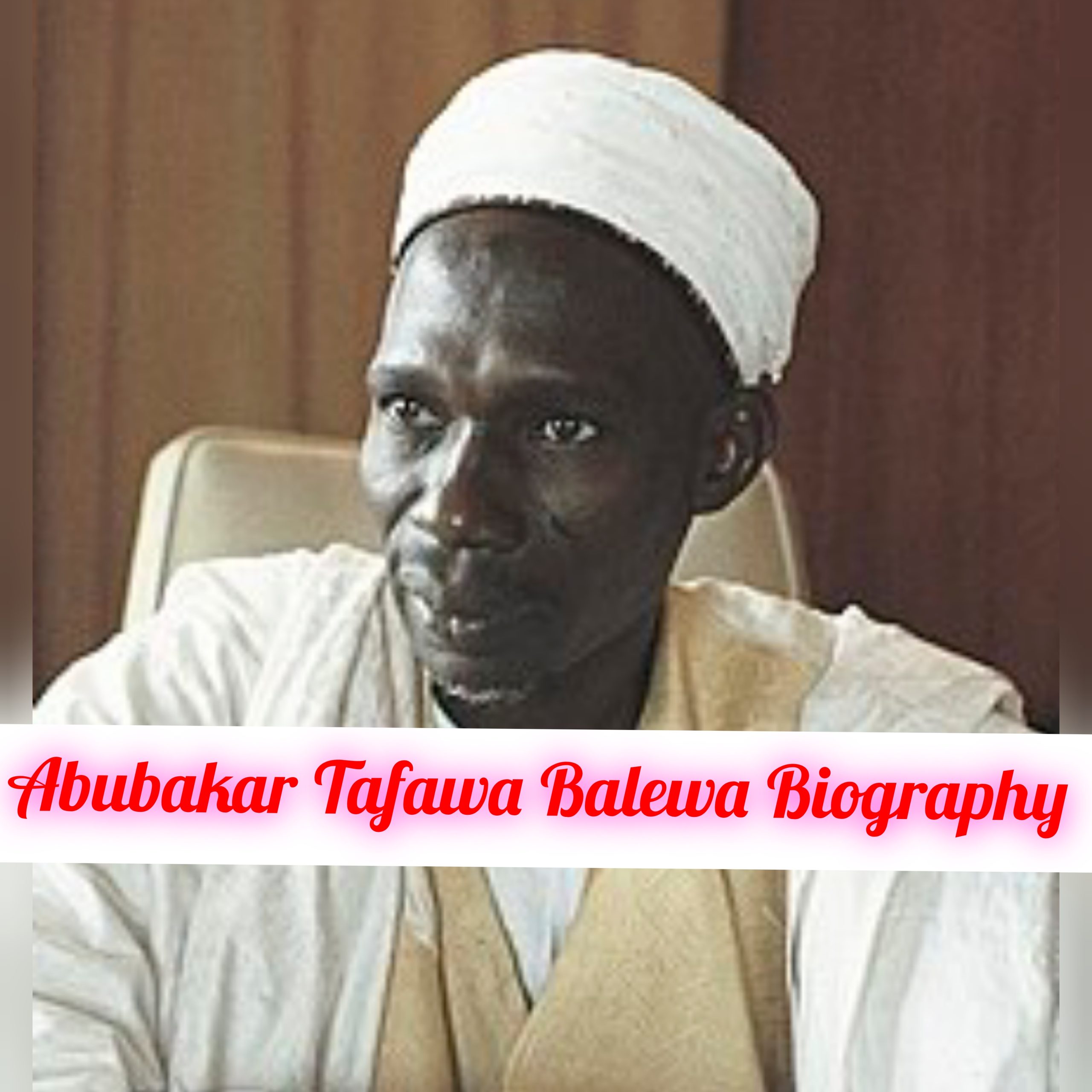
Sir Abubakar Tafawa Balewa remains one of the central figures in the story of modern Nigeria. As the country’s first and only Prime Minister, he guided the nation through the final years of colonial rule and the early years of independence. His quiet manner, clear speaking style, and steady commitment to national unity earned him lasting respect both at home and abroad.
Born into a modest family in the north, he rose through education and public service to become a key architect of Nigeria’s federal system. His life reflects the challenges and hopes of a young African nation finding its place in the world.
Abubakar Tafawa Balewa was born in December 1912 in the village of Tafawa Balewa in the Lere district of Bauchi Province, then part of the Northern Nigeria Protectorate. He was a Nigerian statesman of Gere (also known as Gerawa or Bageri) and Fulani heritage.
Abubakar Tafawa Balewa Early Life
Abubakar Tafawa Balewa entered the world in December 1912 in the small village that would later form part of his name. The settlement of Tafawa Balewa sits in what is now Bauchi State in northeastern Nigeria. At the time of his birth the area belonged to the Northern Nigeria Protectorate under British administration. His father, Yakubu Dan Zalla, was a Gerawa man who worked as a minor official in the Native Authority, serving in the household of the district head of Lere within the Bauchi Emirate. His mother, Fatima Inna, came from mixed Gere and Fulani descent. Family oral history records that Balewa’s paternal grandfather, Isa, had been killed by rivals, after which his widow sought protection in Bauchi under the care of the Madaki. Balewa was the eldest and, according to some accounts, the only child of his parents.
The village name itself derives from Fulani words that roughly mean black rock, a detail that later inspired the nickname “Black Rock” applied to Balewa by some contemporaries. He grew up in a hierarchical Muslim society where status was often tied to aristocratic lineage. His own background stood apart from the ruling Fulani and Hausa elite of the north. From an early age he attended a traditional Quranic school in Bauchi, where he memorised the first chapter of the Quran. When colonial authorities began to encourage Western education in the Northern Provinces, he was among the children selected for formal schooling.
He began primary education at the elementary school in Tafawa Balewa village around 1922 and continued until 1925. From there he moved to Bauchi Middle School, completing that stage in 1928. These early years formed the foundation of a disciplined and thoughtful character that would mark his later public life. The distance between his village and later schools required long journeys on foot during holidays, sometimes covering more than four hundred kilometres by walking forty kilometres a day and resting in villages along the way. Such experiences of physical endurance and self reliance shaped the quiet determination that observers later noted in him.
Abubakar Tafawa Balewa Personal Life
Balewa lived according to the values of a devout Muslim of the north. He maintained a modest household even after rising to high office. He married four wives in accordance with Islamic practice: Zainab (also known as Lami or Zainab Inni), Jummai (Aisha Jummai), Laraba, and Umma. The marriages took place over a period of years, and the wives rotated between the official residence in Lagos and the family home in Bauchi during his time as Prime Minister. Two wives would typically stay with him in the capital while the others remained in the north, exchanging places after intervals.
He was described by those who knew him as reserved, self effacing, and courteous. He rose early for prayers, kept regular working hours, and preferred simple living. At the time of his death his principal personal assets were his house in Bauchi and a fifty acre farm situated about nine miles outside the town on the road toward his native village. The farm served both as a place of rest and as an informal setting where he sometimes conducted official discussions. He performed the Hajj pilgrimage to Mecca, earning the title Alhaji. Friends and colleagues often remarked on his straightforward manner and his reluctance to display the trappings of power. After his death the widows eventually returned to live together in Bauchi, upholding the family household in the years that followed.
Abubakar Tafawa Balewa Age
Balewa was born in December 1912 and died on 15 January 1966. He was fifty three years old at the time of his death. Contemporary accounts sometimes listed his age as fifty four, depending on the exact day in December used for calculation. His relatively early death cut short a political career that had only recently reached its peak with Nigerian independence.
Abubakar Tafawa Balewa Education
After completing middle school, Balewa entered Katsina Higher College, later known as Barewa College, in 1928. He remained there until 1933 and qualified as a teacher. The college served as an important training ground for northern civil servants and educators. Among his contemporaries were future leaders such as Ahmadu Bello. Balewa performed especially well in English. Upon graduation he returned to Bauchi Middle School as a teacher, specialising in English instruction. Over the following decade he advanced steadily, earning the Teacher Grade I certificate in 1944 and becoming headmaster of the school.
In 1945 he received a scholarship to study at the Institute of Education of the University of London. He completed a teacher’s diploma, with particular attention to history, and returned to Nigeria in 1946. The experience broadened his understanding of educational systems and administrative methods. Back home he briefly served as an education officer and later as Inspector of Schools in Bauchi Province. He also held a seat on the advisory council of the Emir of Bauchi. These years in teaching and educational administration gave him practical knowledge of northern society and the challenges of expanding literacy and schooling under colonial rule.
Abubakar Tafawa Balewa Career
Teaching and Early Public Service
Balewa’s professional life began in the classroom. After qualifying at Katsina Higher College he taught at Bauchi Middle School and later became its headmaster. His reputation for clear instruction and personal integrity led to further responsibility as an education officer and provincial inspector of schools. In 1943 he founded the Bauchi Discussion Circle, a small group interested in social and political reform. The circle reflected a growing awareness among educated northerners of the need for change within the Native Authority system.
Entry into Politics
In 1946 the Bauchi Native Authority selected Balewa as its representative to the Northern House of Assembly. The following year he became one of the five northern members of the Central Legislative Council in Lagos. In a notable speech he called for reform of the Native Administration and clearer relations with the colonial government. The address drew attention and contributed to later administrative changes. Together with Ahmadu Bello he helped transform a cultural organisation into the Northern People’s Congress, which became the dominant political party of the north. Balewa served as deputy leader of the party while Bello remained its president general and focused on regional affairs.
Ministerial Responsibilities
Under the 1951 constitutional arrangements Balewa won election to both the Northern House of Assembly and the federal House of Representatives. In 1952 he was appointed Federal Minister of Works. Two years later he became Minister of Transport and the senior northern minister in the federal cabinet. In these posts he oversaw infrastructure projects that linked the regions, including ports, river transport, and railway development. His practical approach and ability to work across regional lines strengthened his standing in Lagos.
Chief Minister and Prime Minister
In 1957 the Northern People’s Congress secured the largest number of seats in the federal legislature. Balewa was appointed Chief Minister and formed a national government that included members of the National Council of Nigeria and the Cameroons and, for a period, the Action Group. On 30 August 1957 he became the first Prime Minister of the Federation of Nigeria. He retained the office after independence on 1 October 1960 and continued until January 1966. As head of government he operated within a federal structure that reserved substantial powers for the regions. His style emphasised consensus, parliamentary procedure, and gradual institutional development.
Foreign Affairs and Continental Role
Balewa shaped Nigeria’s early foreign policy. He supported African independence movements while maintaining close ties with Britain and the Commonwealth. In 1960 he helped mediate among factions in the Congo crisis. He condemned the Sharpeville shootings in South Africa and pressed for stronger Commonwealth action against apartheid. He played an active part in the founding of the Organisation of African Unity in 1963. In 1961 he visited the United States, addressed a joint session of Congress, and established personal rapport with President John F. Kennedy. He later participated in the first live satellite telephone conversation between heads of government. His government maintained a firmly non communist stance and discouraged the spread of Soviet influence in Nigeria.
Final Years in Office
The early 1960s brought rising regional tensions, disputed elections, and violence in the Western Region. Balewa’s federal government struggled to contain the conflicts. A partial boycott of the 1964 federal election and subsequent unrest weakened the First Republic. On 15 January 1966 a group of army officers launched a coup. Balewa was taken from his residence in Lagos. His body was discovered days later near the Lagos Abeokuta road. He was buried in Bauchi. The coup ended civilian rule and ushered in a long period of military government.
Abubakar Tafawa Balewa Family
Balewa and his four wives raised a large family. Contemporary records and later family statements indicate that he fathered nineteen or twenty children. Among the sons were Yakubu, Mukhtar, Sadiq, Umar, Ahmed, Haruna, Aminu, and others. Daughters included Binta, Talle, Saude, Amina, Hafsat, Rabi, Yalwa, Uwani, and Zainab. One daughter, Zainab, was born to Jummai two weeks after Balewa’s death. Several children later pursued education and public roles. The family home in Bauchi remained a centre of continuity after 1966. His mother survived him by less than a year. The wives, after temporary remarriages that did not last, returned to the Bauchi household and raised the younger children together.
Abubakar Tafawa Balewa Philosophy
Balewa’s outlook combined Islamic faith, respect for traditional northern institutions, and a belief in gradual constitutional progress. He valued education as the foundation of personal and national advance. He saw federalism as the practical means of holding together a diverse country. In public speeches he stressed honesty, patience, and the equal dignity of citizens regardless of region or ethnicity. He preferred negotiation over confrontation and sought to keep Nigeria aligned with Western democratic traditions while supporting African solidarity. His personal modesty reinforced the political message that public office existed for service rather than enrichment.
Abubakar Tafawa Balewa Achievements
As teacher and headmaster he helped expand Western education in the north. As minister he advanced national transport infrastructure. As Prime Minister he steered Nigeria to independence without major violence, established the country’s place in the Commonwealth and the United Nations, and contributed to the creation of the Organisation of African Unity. He oversaw the transition to a republic in 1963 while preserving parliamentary institutions. His government laid foundations for the Central Bank of Nigeria and early broadcasting services. The literary work Shaihu Umar, written in Hausa in the early 1930s and later translated, remains an early contribution to modern Hausa prose. Institutions named in his honour, including Abubakar Tafawa Balewa University in Bauchi and the airport that bears his name, continue to mark his public contribution. His portrait appears on the five naira note, ensuring daily visibility of his image across the country.
Abubakar Tafawa Balewa Awards
In 1955 Balewa received the honour of Commander of the Order of the British Empire. In January 1960 Queen Elizabeth II appointed him a Knight Commander of the Order of the British Empire. He was admitted to the Privy Council. In May 1960 the University of Sheffield conferred an honorary doctorate upon him. In July 1961 New York University awarded him an honorary doctorate of laws. These recognitions reflected both British colonial ties and the international standing he had achieved by the time of independence.
Abubakar Tafawa Balewa Literary Work
In the early 1930s, while still a young teacher, Balewa wrote the Hausa novella Shaihu Umar at the request of the colonial Translation Bureau. The story follows a pious Muslim narrator and explores themes of slavery, family duty, and submission to divine will. First published in 1934, it later appeared in English translation and was adapted for the stage and screen. The work stands as an early example of modern Hausa literature produced by a northern intellectual who would later enter national politics.
Abubakar Tafawa Balewa Legacy
Balewa’s death marked the end of Nigeria’s First Republic. The violence that followed in the north and the subsequent counter coup of July 1966 deepened ethnic divisions that still echo in national politics. Yet his reputation for personal honesty and measured leadership has endured. Historians note that he was unusual among northern leaders in rising from non aristocratic origins. His insistence on federal cooperation and his refusal to amass personal wealth set a standard often cited by later generations. The tomb complex in Bauchi, declared a national monument, includes a library and mosque and remains a place of quiet remembrance. Streets, squares, and institutions across Nigeria continue to carry his name, keeping the memory of the first Prime Minister present in public life.
Conclusion
Abubakar Tafawa Balewa’s life traced a clear arc from a village schoolboy in Bauchi Province to the head of government of an independent African nation. He brought the habits of a teacher and the caution of a northern administrator into the turbulent arena of national politics. His years in office saw Nigeria take its place among the free nations of the world and helped lay the institutional groundwork of the federal state. Though his government could not resolve the deep regional rivalries of the early 1960s, the personal example he set of modesty, clarity of speech, and commitment to constitutional process continues to offer a reference point for Nigerian public life. Six decades after his death, the institutions that bear his name and the currency that carries his image keep alive the memory of the quiet statesman who led Nigeria into independence.
FAQs
Who was Abubakar Tafawa Balewa?
Abubakar Tafawa Balewa was a Nigerian teacher, politician, and statesman who served as the first and only Prime Minister of Nigeria from 1957 until his death in 1966. He led the country through independence from Britain in 1960.
When and where was Abubakar Tafawa Balewa born?
He was born in December 1912 in the village of Tafawa Balewa in the Lere district of Bauchi Province, then part of the Northern Nigeria Protectorate and now in Bauchi State, Nigeria.
What was Abubakar Tafawa Balewa’s educational background?
He attended Quranic school, elementary and middle schools in the Bauchi area, Katsina Higher College (Barewa College) from 1928 to 1933, and the Institute of Education at the University of London in 1945 and 1946, where he obtained a teaching diploma.
How did Abubakar Tafawa Balewa enter politics?
After years as a teacher and education officer he was selected in 1946 to represent Bauchi in the Northern House of Assembly. He later helped form the Northern People’s Congress and rose through ministerial posts to become Prime Minister in 1957.
What role did Abubakar Tafawa Balewa play in Nigerian independence?
As Chief Minister and then Prime Minister he led the federal government during the final negotiations with Britain, announced the formal request for independence, and received the instruments of independence on 1 October 1960.
Was Abubakar Tafawa Balewa married and did he have children?
Yes. He married four wives and was the father of nineteen or twenty children. The family maintained homes in Lagos and Bauchi.
How did Abubakar Tafawa Balewa die?
He was killed during the military coup of 15 January 1966. His body was discovered several days later near the Lagos Abeokuta road and was buried in Bauchi.
What is Abubakar Tafawa Balewa remembered for today?
He is remembered as Nigeria’s first Prime Minister, a moderate voice for national unity, a contributor to the founding of the Organisation of African Unity, and a leader noted for personal modesty. His image appears on the five naira note and several major institutions carry his name.