Milton Obote Biography: Age, Death, Early Life, Personal Life, Family, Education, Career, Awards, Philosophy, Achievements, Legacy, Net Worth
Milton Obote Biography
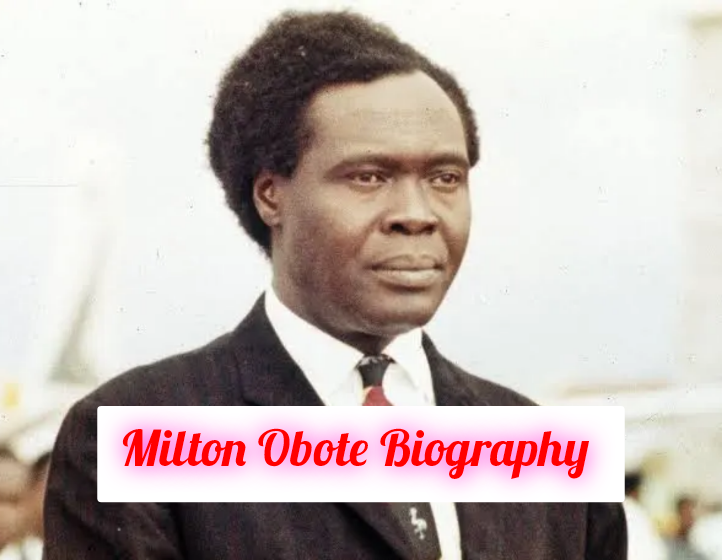
Apollo Milton Obote remains one of the most consequential and contested figures in modern Ugandan history. As the leader who guided the country to independence from British colonial rule, he shaped the early institutions of the nation and sought to build a centralized state free from the divisions of traditional kingdoms. His political journey spanned the transition from colonial subject to prime minister and twice president, periods marked by ambitious reforms, ethnic tensions, and eventual military overthrow.
His life reflected the broader struggles of post-colonial Africa, where aspirations for unity and development often collided with deep-seated regional and political rivalries. Obote’s vision for Uganda combined nationalist ideals with socialist-inspired policies, yet his governments faced accusations of authoritarianism and human rights abuses that continue to color assessments of his legacy.
Apollo Milton Obote was born in Akokoro village in the Apac District of northern Uganda and was a Ugandan national of the Lango ethnic group.
Milton Obote Early Life
Apollo Milton Obote was born on 28 December 1925 in the village of Akokoro, located in what was then the Lango District of the British Uganda Protectorate and is now part of Apac District in northern Uganda. He was the third of nine children born to Stanley Opeto, a farmer and minor chief of the Oyima clan within the Lango ethnic group, and his wife Puliska or Priscilla Aken Opeto. The family lived a rural life centered on farming, and Obote later recalled periods spent herding goats for his maternal grandfather when his father was transferred for work.
Uganda at the time of his birth was a British protectorate, and northern regions such as Lango experienced different patterns of colonial administration compared with the more centralized kingdoms of the south, particularly Buganda. Obote’s early years unfolded against this backdrop of colonial rule and ethnic diversity. He began formal education relatively late by modern standards, starting around the age of eleven with catechism classes before attending primary school. He first went to Ibuje Primary School in Lira, then to Boroboro Primary School near Lira, and later to Gulu Junior Secondary School or Gulu High School. Sources consistently note his strong academic performance, often ranking at or near the top of his class.
From Gulu he proceeded to Busoga College in Mwiri near Jinja, a prominent secondary institution. There he continued to excel and prepared for higher education. In 1948 he entered Makerere College in Kampala, then the leading higher education institution in East Africa, to study a general arts course that included English, geography, economics, and political science. He had hoped to study law, a subject not then offered at Makerere. His time at the college proved formative for his political awareness. He developed oratorical skills and engaged in student activities. Accounts differ on the precise reason for his departure after about two years. Some report that he was expelled for participating in a student strike related to food or political issues, while Obote himself later stated that he left voluntarily while awaiting a scholarship to study law in Khartoum that the colonial authorities ultimately blocked. British officials also prevented him from accepting scholarships offered for study in the United States and West Germany.
After leaving Makerere, Obote worked briefly in Buganda in southern Uganda as a labourer, clerk, and salesman. In 1950 he moved to Kenya, where he took similar jobs, including construction work with an engineering firm. While in Kenya he became involved in the independence movement, joining the Kenya African Union associated with Jomo Kenyatta. This experience radicalized his views on colonial rule and prepared him for political activism upon his return to Uganda. He completed further studies through correspondence courses. These early experiences of rural Lango life, missionary education, incomplete university studies, and exposure to regional independence struggles formed the foundation of his later political outlook.
Milton Obote Personal Life
Obote married Miria Kalule on 9 November 1963 at Namirembe Cathedral in Kampala. The wedding was attended by figures including President Edward Mutesa II. Miria, born in 1936 in Kampala, came from a Baganda background, and the inter-ethnic marriage initially faced some family opposition. She later became a political figure in her own right, serving as First Lady during both of Obote’s presidential terms and, after his death, as president of the Uganda People’s Congress from 2005 to 2010.
The couple had five children. Among them was Jimmy Akena Obote, who later entered politics as a member of parliament and eventual leader of the Uganda People’s Congress. Other children mentioned in accounts include Tony Akaki, Edward Stanley Engina or Maitum, Ben Obote, and a daughter. Family life was frequently interrupted by political upheaval. During periods of exile the family accompanied or remained connected to Obote, and Miria played a supportive role through the years of opposition and displacement. Obote was known for a personal style that included pipe smoking and a reputation for intense work habits that sometimes sidelined regular meals. After his final ouster he lived quietly in exile, primarily in Zambia, with his family maintaining ties to Ugandan politics through the party he founded.
Milton Obote Age
Apollo Milton Obote was born on 28 December 1925 and died on 10 October 2005. He was therefore 79 years old at the time of his death, though some contemporary reports rounded the age to 80. He lived through the final decades of British colonial rule, the achievement of Ugandan independence, two periods as head of government, two military overthrows, and two decades of exile. His lifespan covered the transition of Uganda from protectorate to independent republic and the turbulent years of successive regimes that followed.
Milton Obote Education
Obote’s formal education began in local Protestant missionary and primary schools in the Lango area, including Ibuje and Boroboro near Lira, followed by Gulu High School. He then attended Busoga College Mwiri, where he completed secondary studies with strong results. In 1948 he enrolled at Makerere College in Kampala for intermediate and degree-level work in arts subjects encompassing English, geography, economics, and political science. He left without completing a full degree after approximately two years. Colonial authorities blocked overseas scholarships, including one for law studies. He subsequently pursued correspondence courses to continue his education. Later in life he received an honorary doctorate from an American university and served as the first chancellor of Makerere University after independence. His educational path, though incomplete in the conventional sense, equipped him with the intellectual tools and political networks that launched his public career.
Milton Obote Career
Entry into Politics and the Independence Movement
After returning from Kenya around 1956 or 1957, Obote joined the Uganda National Congress, one of the early nationalist parties. In 1958 he was elected or nominated to represent his home Lango district in the colonial Legislative Council. There he gained a reputation for outspoken criticism of British policies despite being among a small number of African members. In 1959 or 1960 the Uganda National Congress split, and Obote’s faction merged with the Uganda People’s Union to form the Uganda People’s Congress. He became its president and built it into a major political force drawing support especially from northern and non-Buganda regions.
Leadership at Independence
In the approach to independence, Obote forged a strategic coalition between the Uganda People’s Congress and the Kabaka Yekka party, which represented the interests of the Buganda kingdom under Kabaka Edward Mutesa II. This alliance secured a parliamentary majority. Uganda achieved independence on 9 October 1962. Obote became the first prime minister of independent Uganda, while Mutesa later assumed the largely ceremonial presidency under a constitution that retained federal elements for the traditional kingdoms. Obote represented Uganda at constitutional conferences in London and worked to establish the new government.
Transition to the Presidency
Tensions soon emerged between the central government and Buganda over issues including the “lost counties” referendum of 1964, which returned certain territories to Bunyoro. Accusations of gold smuggling involving Obote and army officer Idi Amin further strained relations. In 1966 Obote suspended the constitution, declared a state of emergency, and ordered troops under Amin to attack the Kabaka’s palace at Mengo. Mutesa fled into exile in Britain, where he later died. Obote assumed the presidency, and a new constitution in 1967 abolished the traditional kingdoms, establishing a unitary republic with an executive presidency. In 1969 the Uganda People’s Congress was declared the sole legal party.
The Move to the Left and First Presidency
During his first period as president Obote pursued policies aimed at greater state control of the economy. In 1969 he issued the Common Man’s Charter, which outlined a “Move to the Left.” The document called for political and economic power to be vested in the majority, nationalization of key enterprises, reduction of foreign influence, and socialist-oriented development. In 1970 the government acquired majority shares in numerous banks, insurance companies, and manufacturing firms. These measures produced mixed economic results and generated both domestic and international reaction. Ethnic and political rivalries persisted, and reliance on the army increased. On 25 January 1971, while Obote was attending a Commonwealth conference in Singapore, Idi Amin seized power in a military coup. Obote went into exile in Tanzania.
Exile and Return
From Tanzania, Obote maintained political activity and a presence among Ugandan exiles. In 1979 Tanzanian forces, together with Ugandan opposition groups, invaded Uganda and overthrew Amin after Amin’s attack on Tanzanian territory. Following a period of interim governments, elections were held in December 1980. The Uganda People’s Congress was declared the winner amid widespread allegations of irregularities. Obote returned as president for a second term beginning in December 1980.
Second Presidency and Final Overthrow
The second presidency was dominated by economic recovery efforts after the destruction of the Amin years, continued socialist-leaning policies, and a growing guerrilla war. Yoweri Museveni’s National Resistance Army conducted an insurgency centered in the Luweero Triangle of central Uganda. Government forces responded with harsh counter-insurgency operations that drew strong international criticism for human rights violations. Estimates of civilian deaths during this period vary widely and remain contested. Internal army divisions culminated in a military coup in July 1985 led by Tito Okello and Bazilio Okello. Obote fled first to Kenya and then to Zambia, where he was granted political asylum and lived for the remainder of his life. He continued as titular leader of the Uganda People’s Congress until shortly before his death.
Milton Obote Family
Obote’s family background was rooted in the Lango community of northern Uganda. His father Stanley Opeto was a minor chief and farmer, and his mother managed the household. He was one of nine siblings. His marriage to Miria Kalule produced five children who largely stayed out of the public eye during the years of power and exile, though Jimmy Akena later became a prominent politician and leader of the Uganda People’s Congress. Family members accompanied or supported him through the periods of displacement in Tanzania and Zambia. After his death Miria returned more fully to Ugandan political life. The family’s experiences mirrored the turbulence of national politics, with periods of prominence alternating with exile and opposition status.
Milton Obote Philosophy
Obote’s political philosophy centered on African nationalism, the creation of a strong unitary state, and a form of socialism adapted to Ugandan conditions. He rejected the federal arrangements inherited from colonial rule that preserved the power of traditional kingdoms, particularly Buganda, arguing that they hindered national unity. The Common Man’s Charter of 1969 expressed his belief that political and economic power should rest with the majority rather than elites or foreign interests. It called for the means of production and distribution to be placed in the hands of the people as a whole, justified nationalization, and aimed to prevent exploitation of the many by the few. The document framed the “Move to the Left” as both a political and economic strategy to realize the true meaning of independence.
Obote positioned himself within the broader pan-African movement, supporting anti-colonial struggles and opposing apartheid. He maintained close relations with leaders such as Julius Nyerere of Tanzania and Kenneth Kaunda of Zambia who pursued similar socialist-oriented paths. In practice his philosophy combined rhetorical commitment to the common man with increasing centralization of power, one-party rule, and reliance on the security forces. Critics argued that the socialist language often served nationalist and power-consolidation goals more than thoroughgoing social transformation. Supporters viewed the charter and related policies as genuine attempts to address inequality and foreign economic dominance in a newly independent state.
Milton Obote Achievements
Obote’s most enduring achievement was leading Uganda to independence in 1962 as the country’s first prime minister. He negotiated the transition from colonial rule and established the initial framework of independent government. During his first term he expanded educational opportunities, health services, and infrastructure in the early post-independence years. He abolished the traditional kingdoms in favor of a unitary republic, a step he believed necessary for national cohesion even though it generated lasting resentment especially among the Baganda. The Common Man’s Charter and associated nationalizations represented an attempt to redirect economic power toward Ugandan control. As a pan-African figure he contributed to regional discussions and the early East African Community. In exile he remained a symbol for sections of the opposition. Posthumously he was recognized with a state funeral and a national independence medal, acknowledging his role in the independence struggle despite the controversies of his rule.
Milton Obote Awards
In 2010, on the occasion of Uganda’s 48th independence anniversary, President Yoweri Museveni posthumously awarded Apollo Milton Obote the National Independence Medal. The medal was presented among a group of 47 individuals recognized for their contributions to the achievement of independence. Obote’s son Jimmy Akena received the medal on behalf of the family. This formal recognition came despite the long political rivalry between Museveni and Obote and reflected an official acknowledgment of Obote’s place in the independence narrative. No other major international awards are prominently recorded in reliable accounts of his life.
Milton Obote Legacy
Obote’s legacy remains deeply divided. For many in northern Uganda and within the Uganda People’s Congress he is remembered as the father of independence and a leader who sought to build a modern, unified nation free from colonial and feudal structures. His early governments expanded social services and asserted national control over key economic sectors. For others, particularly survivors of violence in the Luweero Triangle and critics of one-party rule, his periods in power are associated with authoritarianism, ethnic tension, and severe human rights abuses. The second presidency in particular is linked to high civilian death tolls during counter-insurgency operations, though precise figures remain disputed among historians and human rights organizations.
His overthrow of the Buganda monarchy and abolition of the kingdoms left lasting political scars. The socialist experiment of the Common Man’s Charter was cut short by the 1971 coup and never fully implemented. In exile he became a figure of opposition rather than governance. The decision by the Museveni government to grant him a state funeral in 2005 and later to award the independence medal signaled a measure of national reconciliation, yet debates over his record continue in Ugandan public life. Historians generally place him among the complex generation of African leaders who inherited fragile colonial structures and struggled to forge stable independent states amid competing ethnic, ideological, and personal ambitions.
Conclusion
Apollo Milton Obote’s life traced the arc of Uganda’s emergence as an independent nation and the difficult decades that followed. From a rural Lango childhood through education, political activism in Kenya and Uganda, leadership at independence, two presidencies, and long exile, he remained a central actor in the country’s political drama. His efforts to create a unitary state and to pursue policies favoring the majority left institutional and ideological marks that subsequent governments inherited and contested. The controversies surrounding his rule, including the use of force against traditional institutions and the human cost of civil conflict during his second term, ensure that evaluations of his career remain contested. Yet his role in ending colonial rule and establishing the first independent government of Uganda is an undisputed historical fact. Understanding Obote requires attention both to the aspirations he articulated and to the practical outcomes of the power he exercised.
FAQs
Who was Milton Obote?
Apollo Milton Obote was a Ugandan politician who served as the first prime minister of independent Uganda from 1962 to 1966 and as president from 1966 to 1971 and again from 1980 to 1985. He led the country to independence from Britain and founded the Uganda People’s Congress.
When and where was Milton Obote born?
He was born on 28 December 1925 in Akokoro village in the Apac District of northern Uganda, then part of the British Uganda Protectorate.
What was Milton Obote’s ethnic background?
He belonged to the Lango ethnic group and was a member of the Oyima clan. His father was a minor chief and farmer.
Who was Milton Obote’s wife?
He married Miria Kalule in 1963. She later served as First Lady and, after his death, as president of the Uganda People’s Congress.
How many children did Milton Obote have?
He and Miria Obote had five children, including Jimmy Akena who later became a political leader.
What was the Common Man’s Charter?
It was a 1969 policy document issued under Obote that outlined a “Move to the Left,” calling for political and economic power to be vested in the majority, nationalization of key enterprises, and socialist-oriented development for Uganda.
Why was Milton Obote overthrown the first time?
In January 1971, while he was attending a Commonwealth conference in Singapore, army commander Idi Amin seized power in a military coup. Tensions within the army and political opposition contributed to the overthrow.
How did Milton Obote return to power?
After Idi Amin was overthrown in 1979 with Tanzanian assistance, elections were held in 1980. The Uganda People’s Congress was declared the winner, and Obote became president for a second time amid allegations of electoral irregularities.
When and how did Milton Obote die?
He died on 10 October 2005 in a hospital in Johannesburg, South Africa, of kidney failure while living in exile in Zambia. He was 79 years old.
Was Milton Obote given a state funeral?
Yes. Despite political differences with the government of Yoweri Museveni, Obote received a state funeral in Kampala in October 2005, and his body was later buried in his home village of Akokoro.