Fei-Fei Li Biography: Age, Early Life, Personal Life, Education, Career, Family, Awards, Philosophy, Achievements, Legacy, Net Worth
Fei-Fei Li Biography
Fei-Fei Li stands as one of the central figures in modern artificial intelligence. Her research in computer vision helped transform how machines interpret visual information and contributed directly to the deep learning advances that reshaped the field in the 2010s. Through academic leadership, industry roles, nonprofit work, and entrepreneurship, she has consistently linked technical progress with questions of human impact and responsibility.
Her path from a childhood in China through immigration, family hardship, and rigorous scientific training to positions of influence in both universities and technology companies offers a clear example of how personal experience can shape scientific priorities. The following account traces that journey with attention to verified details of her life, education, professional contributions, and ongoing work.
Fei-Fei Li was born on July 3, 1976, in Beijing, China. She is a Chinese-born American computer scientist.
Fei-Fei Li Early Life
Fei-Fei Li spent her early years in Chengdu, the capital of Sichuan province in southwestern China. Her mother, Kuang Ying, worked as a secondary school teacher. Her father, Li Sun (also referred to in some accounts as Li Shun), held a position in the computer department of a chemical factory. The family belonged to the middle class, yet political circumstances related to her mother’s family background created limitations and pressures during the late 1980s.
As a child she showed strong academic ability and a wide curiosity that ranged across science books, science fiction, and European literature. Teachers sometimes viewed her outperformance of male classmates as improper under the social norms of the time. She attended Sichuan Chengdu No. 7 High School.
When Li was twelve years old her father emigrated to the United States and settled in Parsippany, New Jersey. In 1992, at the age of fifteen or sixteen, she and her mother joined him. The family lived in a one bedroom apartment and faced the practical challenges of starting over with limited English and limited financial resources. Her father worked as a camera repairman. Her mother took a job as a supermarket cashier. Li herself worked part time as a waitress in Chinese restaurants and as a cleaner while attending Parsippany High School.
A high school mathematics teacher named Bob Sabella played an important role in her adjustment. He and his wife later helped the family by lending money that allowed Li’s parents to purchase a dry cleaning business. Li graduated from Parsippany High School in 1995 and was later inducted into the school’s hall of fame in 2017. The experience of immigration, language barriers, and economic necessity left a lasting imprint on her understanding of resilience and of the practical realities faced by ordinary people.
Fei-Fei Li Personal Life
Li maintains a private family life centered on her husband, children, and parents. She has spoken publicly about the importance of balancing professional demands with family responsibilities and about the multigenerational household in which her parents live with her and her children. Her mother’s long term health challenges influenced her later interest in applying artificial intelligence to healthcare and elder care.
She has described herself as focused on being a good mother above other professional titles. Conversations at home about technology often center on responsibility and on using tools wisely rather than on technical details alone. She has also spoken about limiting screen time for her children when they were young.
Fei-Fei Li Age
Born on July 3, 1976, Fei-Fei Li is fifty years old as of 2026.
Fei-Fei Li Education
After high school Li received a scholarship to Princeton University. She earned a Bachelor of Arts degree in physics in 1999 with high honors. During her undergraduate years she returned home most weekends to help operate the family dry cleaning business and also worked as a dishwasher to support household income. She completed a senior thesis on auditory processing under the supervision of Bradley Dickinson.
She then entered the California Institute of Technology for graduate study. She received a Master of Science in electrical engineering in 2001 and a Doctor of Philosophy in electrical engineering in 2005. Her dissertation, titled Visual Recognition: Computational Models and Human Psychophysics, was supervised primarily by Pietro Perona with secondary supervision by Christof Koch. The work combined computational modeling with insights from human psychophysics and cognitive neuroscience. Her graduate studies were supported in part by the National Science Foundation Graduate Research Fellowship and the Paul and Daisy Soros Fellowships for New Americans.
The interdisciplinary training at Caltech, spanning electrical engineering, computer science, and neuroscience, shaped the approach she would later bring to large scale computer vision research.
Fei-Fei Li Career
Academic Appointments and Laboratory Leadership
After completing her doctorate Li held an assistant professor position in the Electrical and Computer Engineering Department at the University of Illinois Urbana Champaign from 2005 to 2006. She then joined the Computer Science Department at Princeton University as an assistant professor from 2007 to 2009. In 2009 she moved to Stanford University as an assistant professor. She was promoted to associate professor with tenure in 2012 and to full professor in 2017. She holds the title of inaugural Sequoia Professor in the Computer Science Department.
From 2013 to 2018 she served as director of the Stanford Artificial Intelligence Laboratory. During that period the laboratory experienced substantial growth. She is a founding co director of the Stanford Institute for Human Centered Artificial Intelligence, established in 2019, and co director of the Stanford Vision and Learning Lab.
Industry Roles
During a sabbatical from Stanford spanning January 2017 to September 2018 Li served as vice president at Google and as chief scientist of artificial intelligence and machine learning at Google Cloud. In that role she focused on applying machine learning capabilities across cloud services and on making the technology more accessible to industry users. She has also served as a board member or advisor to various public and private companies, including an earlier advisory role connected to Twitter.
ImageNet and Computer Vision Research
While at Princeton in 2007 Li initiated the ImageNet project. Drawing on an estimate by cognitive psychologist Irving Biederman that humans recognize roughly thirty thousand object categories, she set out to create a large scale hierarchical image database. The project used WordNet as an organizational scaffold and ultimately assembled approximately fourteen to fifteen million labeled images across roughly twenty two thousand categories. Amazon Mechanical Turk was used extensively for annotation.
The dataset was released in 2009 together with a research paper. In 2010 Li and colleagues launched the ImageNet Large Scale Visual Recognition Challenge. The annual competition provided a common benchmark that allowed researchers to compare algorithms under identical conditions. In 2012 a deep neural network model known as AlexNet, developed by a team associated with Geoffrey Hinton, achieved a decisive improvement in accuracy. That result is widely regarded as a pivotal demonstration that large scale data combined with deep learning could produce rapid advances in computer vision. ImageNet is frequently cited as one of the key factors that accelerated the modern deep learning era.
Li has published more than three hundred to four hundred scientific articles in leading journals and conferences. Her research interests have expanded over time to include robotic learning, ambient intelligence for healthcare delivery, and spatial intelligence.
Entrepreneurship and Spatial Intelligence
In 2024 Li co founded World Labs, an artificial intelligence company focused on spatial intelligence and generative models that understand and generate three dimensional environments. She serves as chief executive officer. The company has developed systems capable of creating navigable three dimensional worlds from text, images, or video prompts. Products and models associated with the effort include Marble and Atlas. World Labs raised substantial funding, reaching a valuation above one billion dollars within months of founding and later exceeding five billion dollars.
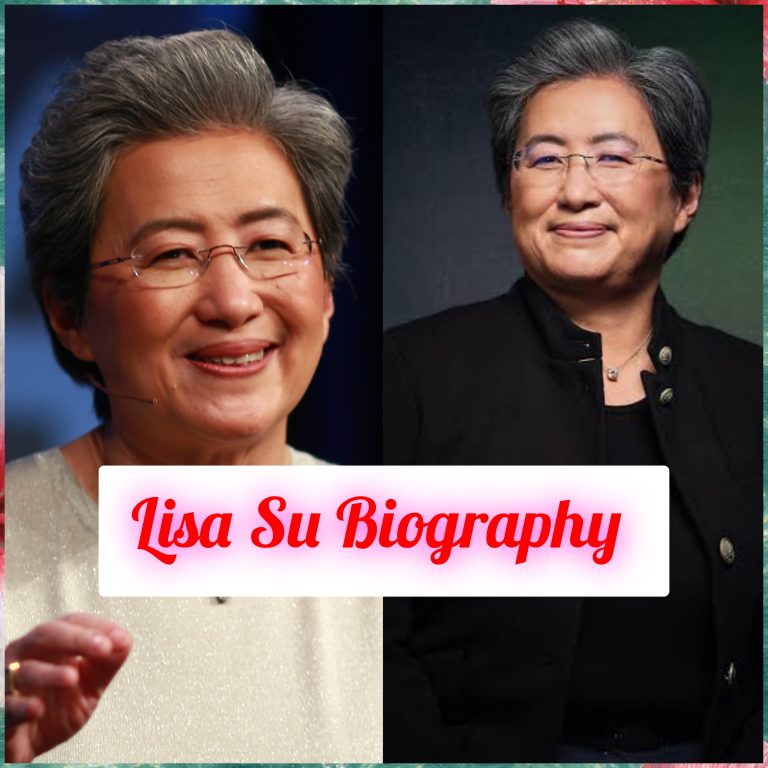
In September 2026 Advanced Micro Devices announced an agreement to acquire World Labs in an all stock transaction valued at approximately 8.2 billion dollars. Upon completion of the transaction Li is expected to join AMD as senior vice president and chief scientist, reporting to chief executive officer Lisa Su. The acquisition positions her work on spatial and physical intelligence within a major semiconductor company’s broader artificial intelligence strategy.
Nonprofit and Public Service Work
In 2017 Li co founded AI4ALL, a nonprofit organization dedicated to increasing diversity and inclusion in artificial intelligence education, particularly for students from underrepresented backgrounds. She has testified before United States congressional committees, served on the California Future of Work Commission, participated in the National Artificial Intelligence Research Resource Task Force, and advised the United Nations Scientific Advisory Board. She has spoken regularly on the need for policy frameworks that keep human values at the center of technological development.
Fei-Fei Li Family
Li is married to Silvio Savarese, an Italian American computer scientist specializing in artificial intelligence, computer vision, and social robotics. Savarese is a professor of computer science at Stanford University and has held senior roles at Salesforce, including executive vice president and chief scientist of artificial intelligence research. The couple met during their time at Caltech and later coordinated academic moves so they could live in the same location. They have one son and one daughter.
Li’s parents live with the family in a multigenerational household. The practical demands of caring for aging parents and the memory of her mother’s health challenges have informed her research interest in ambient intelligence systems that can support healthcare delivery and daily living assistance.
Fei-Fei Li Philosophy
Li consistently describes artificial intelligence as a tool created by humans, used by humans, and governed by humans. She rejects the notion that the technology possesses independent values or agency. Instead she argues that its effects reflect the choices of its designers, deployers, and regulators.
Her framework of human centered artificial intelligence rests on several related principles. First, research and development should remain multidisciplinary, drawing on cognitive science, neuroscience, the social sciences, law, medicine, and the humanities rather than remaining confined to computer science alone. Second, the primary goal should be to augment and enhance human capabilities rather than to replace human roles in ways that diminish dignity or opportunity. Third, every stage of design, deployment, and governance must consider concrete human impacts at the levels of the individual, the community, and society.
She has emphasized that productivity gains from artificial intelligence do not automatically produce shared prosperity and that questions of bias, privacy, labor displacement, and access require deliberate attention. She has also stressed the importance of independent evaluation, public sector capacity, and broad participation in shaping the technology. In her view the messiness that accompanies powerful new tools is inevitable, yet it can be navigated productively when human well being remains the explicit priority.
Fei-Fei Li Achievements
The creation and public release of ImageNet together with the associated challenge stand as Li’s most widely recognized technical achievement. By providing a large, diverse, and carefully annotated dataset and a shared evaluation protocol, the project enabled systematic progress in visual recognition and helped demonstrate the power of deep neural networks at scale. The work is frequently listed among the factors that launched the modern era of deep learning applications.
Beyond ImageNet she has advanced research in robotic learning, cognitive neuroscience informed models, and ambient intelligence systems intended to support healthcare environments. As a laboratory director and institute co founder she helped expand institutional capacity for artificial intelligence research that integrates technical, ethical, and societal perspectives. Through AI4ALL she has worked to broaden the pipeline of future practitioners. Her memoir, The Worlds I See: Curiosity, Exploration, and Discovery at the Dawn of AI, published in 2023, combines personal narrative with an accessible account of the scientific developments she witnessed and helped shape. The book has been recognized on several notable reading lists.
Her transition into entrepreneurship with World Labs extended her long standing interest in visual understanding into the domain of spatial intelligence, seeking systems that can model three dimensional physical environments in ways useful for robotics, design, simulation, and scientific applications.
Fei-Fei Li Awards
Li has received numerous honors reflecting both technical contributions and broader influence. Early recognitions include the Kusaka Memorial Prize in Physics from Princeton University in 1999 and the Paul and Daisy Soros Fellowship for New Americans. She received the Microsoft Research New Faculty Fellowship in 2006, the National Science Foundation CAREER Award in 2009, and an Alfred P. Sloan Faculty Award in 2011.
Later awards include the IEEE PAMI Mark Everingham Award and the IAPR J.K. Aggarwal Prize in 2016, the IEEE PAMI Longuet Higgins Prize and the National Geographic Society Further Award in 2019, election to the National Academy of Engineering and the National Academy of Medicine in 2020, election to the American Academy of Arts and Sciences in 2021, the IEEE PAMI Thomas S. Huang Memorial Prize in 2022, and the Intel Lifetime Achievements Innovation Award in 2023. She was named to Time magazine’s AI100 list in 2023.
In 2024 she received the Woodrow Wilson Award from Princeton University and the grand prize of the VinFuture Prize. In 2025 she was awarded the Queen Elizabeth Prize for Engineering jointly with several other leading figures in artificial intelligence and computing. She has also received distinguished alumni recognitions from both Princeton and Caltech and holds honorary doctorates from institutions including Yale University and Harvey Mudd College. She is a Fellow of the Association for Computing Machinery and a member of the Council on Foreign Relations.
Fei-Fei Li Current News
In September 2026 Advanced Micro Devices announced that it would acquire World Labs, the spatial intelligence company co founded by Li, in a transaction valued at approximately 8.2 billion dollars. The deal is expected to close by the end of 2026. Upon completion Li will join AMD as senior vice president and chief scientist, reporting directly to chief executive officer Lisa Su. The acquisition reflects industry interest in physical and spatial artificial intelligence capabilities that complement existing large language model and chip focused efforts. Li has described the combination as a natural extension of technical collaboration already underway between the two organizations.
Fei-Fei Li Net Worth
According to the Bloomberg Billionaires Index, Li’s net worth is expected to reach at least 1.6 billion dollars upon completion of the AMD acquisition of World Labs. Earlier funding rounds for the company had already established her as a billionaire. These figures are based on equity valuations associated with the startup and the announced transaction terms. Personal net worth estimates of this kind remain subject to final deal structure, share prices, and other financial variables.
Fei-Fei Li Philanthropy and Public Advocacy
Through the nonprofit AI4ALL, which she co founded, Li has supported educational programs aimed at high school and college students from backgrounds historically underrepresented in artificial intelligence research and industry. The organization focuses on expanding access to technical knowledge and to networks that can support long term careers in the field.
She has used public platforms, including congressional testimony and international advisory roles, to argue for governance approaches that keep human values central. Her advocacy emphasizes the need for multidisciplinary input, careful attention to near term risks such as bias and labor effects, and the preservation of human agency in the design and use of intelligent systems.
Fei-Fei Li Legacy
Li’s most enduring technical contribution remains the demonstration that carefully constructed large scale visual data, combined with open benchmarking, can accelerate scientific progress in machine perception. The cultural and institutional effects of that demonstration continue to shape how researchers approach data, evaluation, and collaboration. At the same time her sustained insistence on human centered principles has helped establish a vocabulary and a set of institutional experiments, including the Stanford Institute for Human Centered Artificial Intelligence, that treat social and ethical questions as integral rather than peripheral to technical work.
Her personal trajectory from immigrant teenager working in a family dry cleaning shop to scientific leader and entrepreneur supplies a concrete illustration of the conditions under which talent can develop and of the practical constraints that many people still face. The combination of rigorous technical achievement and consistent attention to human consequences positions her work as a reference point for discussions about the responsibilities that accompany powerful new technologies.
Conclusion
Fei-Fei Li’s career illustrates how a sustained focus on fundamental scientific questions, combined with attention to data, evaluation, and human impact, can influence an entire research field. From the construction of ImageNet through laboratory leadership, industry service, nonprofit education efforts, and the recent development of spatial intelligence systems, she has repeatedly connected technical possibility with practical and ethical considerations. Her trajectory also underscores the role of education, mentorship, and personal resilience in enabling contributions that extend far beyond any single dataset or institution. As artificial intelligence continues to evolve, the principles she has articulated and the institutions she has helped build remain relevant guides for researchers, policymakers, and the broader public.
FAQs
Who is Fei-Fei Li?
Fei-Fei Li is a Chinese born American computer scientist known for pioneering work in computer vision and artificial intelligence. She created the ImageNet dataset that accelerated advances in deep learning, serves as Sequoia Professor of Computer Science at Stanford University, co directs the Stanford Institute for Human Centered Artificial Intelligence, and co founded the spatial intelligence company World Labs.
When and where was Fei-Fei Li born?
She was born on July 3, 1976, in Beijing, China, and grew up in Chengdu, Sichuan province.
What is Fei-Fei Li’s educational background?
She earned a Bachelor of Arts in physics from Princeton University in 1999, a Master of Science in electrical engineering from the California Institute of Technology in 2001, and a Doctor of Philosophy in electrical engineering from Caltech in 2005.
What is ImageNet and why is it important?
ImageNet is a large scale hierarchical database of approximately fourteen to fifteen million labeled images organized into roughly twenty two thousand categories. Created under Li’s leadership and released in 2009, it provided a shared resource and benchmark that enabled rapid progress in computer vision and helped demonstrate the effectiveness of deep neural networks.
What is human centered artificial intelligence according to Fei-Fei Li?
It is a framework that treats artificial intelligence as a tool whose values are human values. The approach emphasizes multidisciplinary research, the goal of augmenting rather than replacing human capabilities, and continuous attention to impacts on individual dignity, community well being, and societal outcomes.
Is Fei-Fei Li married and does she have children?
Yes. She is married to computer scientist Silvio Savarese. They have one son and one daughter.
What is World Labs?
World Labs is an artificial intelligence company co founded by Li in 2024 that focuses on spatial intelligence and generative models capable of understanding and creating three dimensional environments. In 2026 Advanced Micro Devices announced an agreement to acquire the company for approximately 8.2 billion dollars.
Has Fei-Fei Li written a book?
Yes. Her memoir, The Worlds I See: Curiosity, Exploration, and Discovery at the Dawn of AI, was published in 2023. It interweaves her personal story with an account of scientific developments in artificial intelligence.
What major awards has Fei-Fei Li received?
Her honors include election to the National Academy of Engineering, the National Academy of Medicine, and the American Academy of Arts and Sciences, the Queen Elizabeth Prize for Engineering in 2025, the VinFuture Prize grand prize in 2024, the Intel Lifetime Achievements Innovation Award, and numerous IEEE and other scientific prizes.
What is Fei-Fei Li’s current professional focus?
She continues as a Stanford professor and co director of the Human Centered AI Institute while leading World Labs. Following the announced acquisition by AMD she is expected to serve as senior vice president and chief scientist at the company, concentrating on spatial and physical intelligence applications.