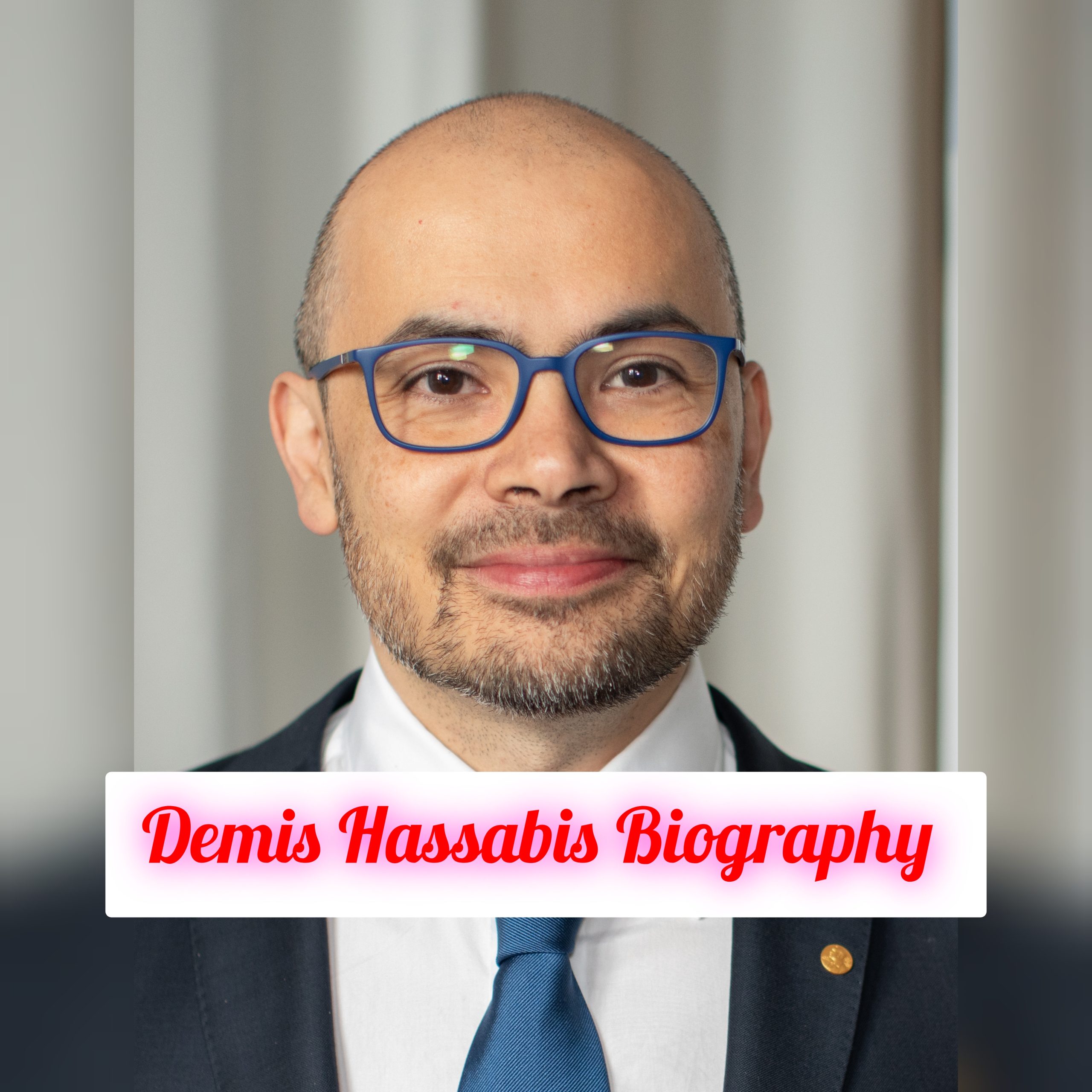
Demis Hassabis Biography: Age, Early Life, Personal Life, Family, Education, Career, Awards, Philosophy, Achievements, Legacy, Net Worth
Demis Hassabis Biography
Demis Hassabis widely stands as one of the most influential figures in artificial intelligence research and its application to scientific discovery. From a childhood marked by exceptional talent in chess and self-taught programming to leading breakthroughs that have transformed fields from games to biology, his work has consistently bridged computational systems with insights into human intelligence.
His path has taken him from designing commercially successful video games as a teenager to co-founding DeepMind, guiding its acquisition by Google, and contributing to systems that solved long-standing scientific challenges. The impact of these efforts reached a landmark in 2024 with recognition at the highest level of scientific achievement.
Sir Demis Hassabis was born in London, England, and holds British nationality.
Demis Hassabis Early Life
Demis Hassabis was born on 27 July 1976 in London, England. He is the eldest of three children born to a Greek Cypriot father, Costas Hassapis, and a Chinese Singaporean mother, Angela. His father grew up as an only child and was the first in his family to attend university, later pursuing creative interests including music while supporting the family through various means. His mother grew up in more difficult circumstances in Singapore, was adopted by a relative, trained in nursing, and later worked in retail and other roles after moving to Britain. The family settled in North London, where Hassabis spent his formative years in a household that valued intellectual curiosity and diverse cultural perspectives.
From the age of four, Hassabis showed remarkable ability in chess after learning the game by observing family members. By age 13 he had reached master standard with an Elo rating of approximately 2300 and ranked among the strongest players in the world for his age group. He captained several England junior chess teams and later represented the University of Cambridge in the Oxford-Cambridge varsity matches, earning a half-blue. Chess prize money helped fund his first computer, a ZX Spectrum 48K, which he used to teach himself programming from books. He created early programs, including a version of the game Othello or Reversi, demonstrating an early interest in artificial systems that could learn or adapt.
Hassabis attended Queen Elizabeth’s School in Barnet, a boys’ grammar school, between roughly 1988 and 1990. He was briefly home-schooled by his mother during a period when he further developed his computing skills. He then continued at Christ’s College, Finchley, a state comprehensive school in East Finchley, North London. He completed his A-level and scholarship-level examinations two years early, at ages 15 and 16. Cambridge University asked him to take a gap year because of his young age, which led him into the video game industry rather than immediate university entry.
Demis Hassabis Personal Life
Hassabis lives in North London with his family. He is a lifelong supporter of Liverpool Football Club. Beyond English, he understands some Greek and has expressed pride in his Greek Cypriot heritage, maintaining contact with that side of his background and visiting Greece regularly. Public accounts describe a private family life that provides balance alongside the intense demands of leading major research efforts. He has spoken of the value of a science-oriented household environment.
Demis Hassabis Age
Born on 27 July 1976, Demis Hassabis is 50 years old as of 2026.
Demis Hassabis Education
After completing school examinations early, Hassabis spent a gap year working in the games industry. He then enrolled at Queens’ College, University of Cambridge, to study the Computer Science Tripos. He graduated in 1997 with a Double First, an outstanding academic result. During his time at Cambridge he continued competitive chess, representing the university.
Following several years in the games industry and founding his own studio, Hassabis returned to formal study. He pursued a PhD in cognitive neuroscience at the Institute of Neurology, University College London, completing it in 2009 under the supervision of Professor Eleanor Maguire. His doctoral research examined the neural mechanisms of episodic memory, imagination, and scene construction, drawing on studies of patients with brain injuries and exploring how the hippocampus supports the recombination of memories into novel scenarios. This work was recognised as one of the top scientific breakthroughs of 2007 by the journal Science and helped open new lines of inquiry into imagination and planning.
He then held a prestigious Sir Henry Wellcome postdoctoral fellowship, working jointly at the Gatsby Computational Neuroscience Unit at UCL, the McGovern Institute at MIT, and the Department of Psychology at Harvard, including time in Tomaso Poggio’s laboratory and with Peter Dayan. These experiences deepened his interest in drawing algorithmic inspiration from biological intelligence for artificial systems.
Demis Hassabis Career
Games Industry Work
During his gap year, Hassabis joined Bullfrog Productions. He contributed to level design on Syndicate and, at age 17, co-designed and served as lead programmer on Theme Park (1994) with Peter Molyneux. The simulation game, in which players build and manage an amusement park, became a commercial success and sold millions of copies. It provided early experience in systems design, artificial intelligence behaviours, and commercial software development.
After graduating from Cambridge, Hassabis worked briefly as lead AI programmer at Lionhead Studios on Black & White (2001), again with Molyneux. In 1998 he founded Elixir Studios in London as an independent developer. The studio produced games for major publishers including Eidos, Microsoft, and Vivendi Universal. Notable titles included Republic: The Revolution (2003), a political simulation, and Evil Genius (2004), which featured advanced AI elements. Elixir became one of the UK’s higher-profile independent studios before closing around 2005.
Founding and Leading DeepMind
In 2010 Hassabis co-founded DeepMind Technologies in London with Shane Legg and Mustafa Suleyman. He had met Legg while both were postdoctoral researchers at the Gatsby Unit; Suleyman was known through a family connection. The company’s stated mission was to solve intelligence and then use that capability to address other major challenges. DeepMind focused on general learning systems inspired partly by neuroscience rather than narrow task-specific AI.
Google acquired DeepMind in 2014 in what was then one of its largest European technology acquisitions. Hassabis remained as CEO. Early landmark results included deep reinforcement learning systems that mastered a range of Atari games from pixel inputs alone, achieving human-level or superhuman performance on many titles. This work demonstrated the power of combining deep neural networks with reinforcement learning.
AlphaGo and Subsequent Game-Playing Systems
In 2016 DeepMind’s AlphaGo system defeated the world champion Go player Lee Sedol in a highly publicised match, a milestone long considered extremely difficult for computers because of the game’s complexity and reliance on intuition. Later systems such as AlphaZero learned to master chess, shogi, and Go from self-play alone, starting with only the rules of each game. These achievements attracted widespread scientific and public attention and advanced understanding of reinforcement learning and search algorithms.
AlphaFold and Scientific Applications
A major scientific application emerged with AlphaFold. The system addressed the protein structure prediction problem, a challenge that had occupied biologists for decades. AlphaFold2 achieved a decisive advance at the CASP14 assessment in 2020. Subsequent releases and the AlphaFold database made predicted structures available for nearly all known proteins, covering hundreds of millions of entries. Researchers worldwide have used these predictions in studies of disease, drug discovery, and fundamental biology. This work was recognised as a Breakthrough of the Year by Science and Method of the Year by Nature.
Hassabis also founded Isomorphic Labs in 2021 as a DeepMind spin-out focused on applying AI to drug discovery and molecular design. He has continued as its CEO. Additional DeepMind projects have included systems for energy efficiency in data centres, medical imaging partnerships such as with the UK National Health Service for eye disease detection, and broader scientific tools.
Leadership Evolution
In 2023 DeepMind’s work became more closely integrated with Google’s broader AI efforts. In August 2026 Alphabet announced leadership changes: Hassabis stepped back from day-to-day operational responsibilities as CEO of Google DeepMind to become Chair of Google DeepMind and Chief Scientist of Alphabet. This role allows greater focus on long-term artificial general intelligence research and strategic direction. Koray Kavukcuoglu assumed operational leadership of Google DeepMind. Hassabis has continued to emphasise AI’s potential for scientific discovery while advocating careful consideration of safety and governance issues.
Demis Hassabis Family
Hassabis is married to a molecular biologist (publicly referred to in some accounts as Teresa) whose research interests have included areas such as Alzheimer’s disease. The couple met while he was at Cambridge. They have two sons. The family resides in North London. His parents’ multicultural backgrounds and emphasis on learning formed an important early influence. He has a younger brother and a younger sister.
Demis Hassabis Philosophy
Hassabis has articulated a consistent two-step vision for artificial intelligence: first solve intelligence itself, then use that capability to solve other major problems facing humanity. He has described the goal of understanding the nature of intelligence as central, drawing inspiration from both computational methods and biological systems, particularly the brain’s capacity for flexible learning, memory, and imagination.
He views AI as potentially one of the most beneficial technologies in human history, capable of accelerating progress in science, health, energy, and climate challenges. At the same time he has repeatedly highlighted risks, including the need for robust safety research, ethical frameworks, and international coordination. He has signed statements treating the mitigation of extreme AI risks as a global priority comparable to other large-scale threats. He has argued against simple pauses on research, noting the difficulty of enforcement and the value of continued beneficial applications, while supporting stronger evaluation standards, oversight mechanisms, and responsible development practices. His public comments often stress scientific curiosity and the use of AI as a tool for deeper understanding of the natural world.
Demis Hassabis Achievements
Beyond specific technical systems, Hassabis’s career demonstrates the value of combining deep technical skill, interdisciplinary insight, and organisational leadership. He moved from early success in commercial games that incorporated AI elements to rigorous academic research on the neural basis of memory and imagination, then to building and scaling a research organisation that produced successive breakthroughs. AlphaGo expanded public and scientific appreciation of reinforcement learning. AlphaFold provided a practical tool that has accelerated biological research at scale. Leadership of DeepMind and later roles at Alphabet have positioned him to shape the direction of large-scale AI research while maintaining a focus on scientific applications. His five-time victory in the Pentamind competition at the Mind Sports Olympiad reflects continued excellence in complex strategy games. He has also competed successfully in poker, reaching the money in World Series of Poker events.
Demis Hassabis Awards
Hassabis has received numerous high-level honours. In 2024 he shared the Nobel Prize in Chemistry with John M. Jumper for contributions to protein structure prediction using artificial intelligence; David Baker received the other half of the prize for computational protein design. The same year he was knighted for services to artificial intelligence, becoming Sir Demis Hassabis. He was appointed Commander of the Order of the British Empire (CBE) in the 2018 New Year Honours for services to science and technology.
Other major awards include the Breakthrough Prize in Life Sciences (2023, shared with John Jumper), the Albert Lasker Basic Medical Research Award (2023, shared with Jumper), the Canada Gairdner International Award (2023, shared with Jumper), the Royal Society’s Mullard Award (2014), the Dan David Prize, the Wiley Prize in Biomedical Sciences, the Princess of Asturias Award for Technical and Scientific Research (shared with other AI pioneers), and fellowship of the Royal Society (FRS), the Royal Academy of Engineering (FREng), and the Royal Society of Arts. He has been listed in Time magazine’s 100 most influential people and was part of the collective “Architects of AI” recognised by Time as Person of the Year in 2025. He has also received recognition from scientific journals and institutions for specific research contributions.
Demis Hassabis Current News
In August 2026 Alphabet announced that Demis Hassabis would transition from CEO of Google DeepMind to Chair of Google DeepMind and Chief Scientist of Alphabet, allowing greater emphasis on long-term AGI research and strategic guidance while operational leadership of the division passed to Koray Kavukcuoglu. He continues as CEO of Isomorphic Labs. Recent public activities have included discussions of AI timelines, scientific applications such as AlphaGenome for predicting effects of DNA variants, systems for generating and refining scientific hypotheses, and calls for stronger industry standards and oversight mechanisms for frontier AI models. He has participated in international forums addressing both the opportunities and governance challenges of advanced AI.
Demis Hassabis Net Worth
Precise figures for Demis Hassabis’s net worth are not publicly disclosed in official financial statements. Independent estimates from various sources in recent years have placed it in a broad range often cited around several hundred million dollars, reflecting proceeds from the DeepMind acquisition, equity interests, compensation from leadership roles at Alphabet and Isomorphic Labs, and related activities. These remain estimates rather than verified audited figures, and actual value depends on shareholdings, company valuations, and other private assets.
Demis Hassabis Legacy and Influence
Hassabis’s career has helped shift artificial intelligence from primarily commercial or entertainment applications toward fundamental scientific discovery. The open release of AlphaFold predictions has enabled research groups worldwide to accelerate work that previously required years of laboratory effort. His insistence on drawing inspiration from neuroscience while scaling computational methods has influenced research directions in both academia and industry. As a public advocate he has contributed to broader conversations about the responsible development of powerful AI systems, emphasising both transformative potential and the need for careful stewardship.
Conclusion
Demis Hassabis has followed a distinctive path that unites exceptional early talent, practical experience in complex software systems, rigorous scientific training, and organisational leadership at the frontier of artificial intelligence. From North London chess boards and early programming experiments to the development of systems that master strategic games and predict protein structures, his work has repeatedly demonstrated the power of general learning approaches. Recognition including the Nobel Prize in Chemistry and a knighthood reflects the scientific and societal significance of these contributions. Looking forward, his continued focus on solving intelligence and applying it to major human challenges positions him at the centre of one of the defining technological and scientific developments of the era.
FAQs
What is Demis Hassabis’s full name and title?
Sir Demis Hassabis CBE FRS FREng, often referred to simply as Demis Hassabis. He was knighted in 2024.
When and where was Demis Hassabis born?
He was born on 27 July 1976 in London, England.
What is Demis Hassabis best known for?
He is best known as the co-founder and long-time leader of DeepMind, for systems such as AlphaGo and AlphaFold, and for sharing the 2024 Nobel Prize in Chemistry for AI-based protein structure prediction.
What is Demis Hassabis’s educational background?
He earned a Double First in Computer Science from Queens’ College, Cambridge, in 1997 and a PhD in cognitive neuroscience from University College London in 2009.
Is Demis Hassabis married and does he have children?
Yes, he is married to a molecular biologist and they have two sons. The family lives in North London.
What is the mission of DeepMind according to Demis Hassabis?
The founding vision has been described as solving intelligence and then using it to help solve other major challenges facing humanity, with particular emphasis on scientific applications.
Has Demis Hassabis received the Nobel Prize?
Yes, in 2024 he shared the Nobel Prize in Chemistry with John M. Jumper for work on protein structure prediction.
What is Demis Hassabis’s current role?
As of late 2026 he serves as Chair of Google DeepMind and Chief Scientist of Alphabet, while remaining CEO of Isomorphic Labs.