Narendra Modi Biography: Age, Early Life, Personal Life, Education, Career, Family, Awards, Philosophy, Achievements, Legacy, Net Worth
Narendra Modi Biography
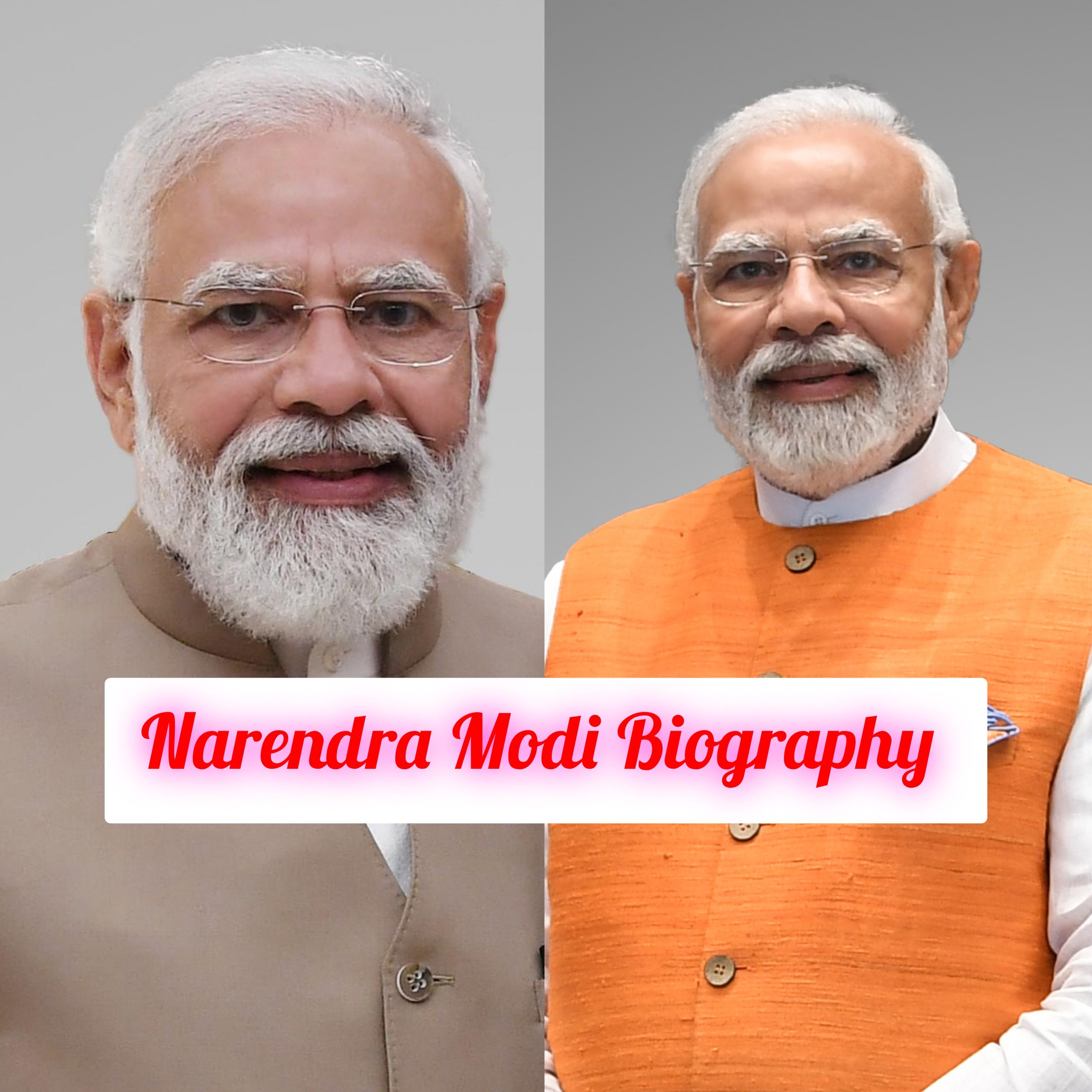
Narendra Damodardas Modi has served and well known as Prime Minister of India since May 2014, leading the Bharatiya Janata Party to consecutive electoral victories and shaping national policy across economic, social, and foreign affairs domains. His journey from a small-town upbringing in Gujarat to the highest elected office reflects a path marked by organisational work within the Rashtriya Swayamsevak Sangh and the Bharatiya Janata Party, followed by a long tenure as Chief Minister of Gujarat.
His leadership style emphasises infrastructure development, digital governance initiatives, and assertive diplomacy, while his early association with Hindu nationalist organisations continues to inform public perceptions of his political outlook. Full name Narendra Damodardas Modi, place of birth Vadnagar in present-day Gujarat, nationality Indian.
Narendra Modi Early Life
Narendra Damodardas Modi was born on 17 September 1950 in Vadnagar, a town in the Mehsana district of what was then Bombay State and is now Gujarat. He was the third of six children born to Damodardas Mulchand Modi and Hiraben Modi. The family belonged to the Modh Ghanchi community, classified as an Other Backward Class, and lived in modest circumstances. Damodardas ran a small tea stall near the Vadnagar railway station, and young Narendra often helped his father sell tea. Later he and one of his brothers operated a tea stall near a bus terminus.
Vadnagar, located in northern Gujarat, provided a traditional Gujarati Hindu environment. Modi completed his higher secondary education there in 1967. Teachers later recalled him as an average student who showed particular interest in debates and theatre. He preferred performing larger than life roles in school plays, an early indication of the public speaking skills that would later define his political career.
Around the age of eight he joined the local unit of the Rashtriya Swayamsevak Sangh, a Hindu nationalist organisation. This early exposure introduced him to disciplined organisational work and the ideology of Hindutva. After finishing school he left home for a period of travel across northern and northeastern India, spending time at places associated with spiritual reflection including sites linked to the Ramakrishna Mission. He returned to Gujarat in the early 1970s and moved to Ahmedabad, where he lived with an uncle and began full time work with the RSS.
Narendra Modi Personal Life
Modi has maintained a highly private personal life. In accordance with community custom he was betrothed in his teens and married Jashodaben Chimanlal Modi around 1968. The couple separated soon afterwards and have lived apart since approximately 1971. They have no children. In election affidavits filed over the years Modi has listed Jashodaben as his spouse while stating that they do not share a household.
He has spoken of a lifelong commitment to public service that left little room for conventional family life. His daily routine as a public figure has long been described as austere, with an emphasis on early rising, disciplined work hours, and limited personal possessions. After becoming Prime Minister he continued to live in official residences without acquiring private property of note.
Narendra Modi Age
As of October 2026 Narendra Modi is 76 years old, having been born on 17 September 1950. He remains active in public life, travelling extensively within India and abroad, addressing large public gatherings, and managing the responsibilities of the Prime Minister’s Office.
Narendra Modi Education
Modi completed his secondary schooling in Vadnagar in 1967. He later pursued higher education through distance learning while engaged in full time organisational work. In 1978 he obtained a Bachelor of Arts degree in political science from the School of Open Learning at the University of Delhi, graduating in the third class. In 1983 he completed a Master of Arts degree in political science from Gujarat University as an external student, securing a first class.
These qualifications were obtained while he was already deeply involved in RSS and later Bharatiya Janata Party activities. His academic focus on political science aligned with the practical political education he received through organisational roles.
Narendra Modi Career
Organisational Work with the Rashtriya Swayamsevak Sangh
After returning to Gujarat in the early 1970s Modi became a full time pracharak, or organiser, for the RSS in Ahmedabad. During the Emergency imposed by the central government between 1975 and 1977 he participated in underground activities opposing the suspension of civil liberties. This period of underground work strengthened his reputation within the organisation for discipline and commitment.
Rise within the Bharatiya Janata Party
In the mid 1980s the RSS seconded Modi to the Bharatiya Janata Party. He worked first at the Gujarat state level, helping strengthen the party organisation. By 1988 he had become general secretary of the Gujarat BJP unit. He later moved to national roles, serving as a national general secretary responsible for organisational matters and election campaigns. In the late 1990s he coordinated the party’s efforts in several state elections.
Chief Minister of Gujarat
On 7 October 2001 Modi was appointed Chief Minister of Gujarat, replacing Keshubhai Patel. The appointment came in the aftermath of the devastating Bhuj earthquake of January 2001 and amid concerns about the state government’s performance. Modi won a by election from the Rajkot II constituency in February 2002 to enter the state assembly.
His tenure as Chief Minister lasted until May 2014. Early in that period the state experienced communal violence following the Godhra train burning of 27 February 2002, in which 59 people, mostly Hindu pilgrims, died. Subsequent riots across Gujarat resulted in the deaths of more than 1,000 people, the large majority of them Muslims, according to official figures, with independent estimates placing the toll higher. Special Investigation Team inquiries appointed by the Supreme Court and the Nanavati Mehta Commission later found no evidence of complicity on Modi’s part and concluded that the state administration had taken steps to control the violence. Critics have continued to question the adequacy of the response and the political atmosphere surrounding the events.
In subsequent years Modi focused on economic development, infrastructure, and attracting investment. The state recorded improved industrial growth, power generation, and road connectivity. He was re elected as Chief Minister in 2002, 2007, and 2012, consolidating the BJP’s hold on Gujarat.
Prime Minister of India
In the 2014 general elections the Bharatiya Janata Party, under Modi’s leadership as its prime ministerial candidate, won a clear majority in the Lok Sabha. He was sworn in as the 14th Prime Minister of India on 26 May 2014. He contested and won the Varanasi parliamentary seat. In 2019 the BJP again secured a majority and Modi began a second term. In the 2024 elections the BJP emerged as the largest party and formed a government with allies; Modi took oath for a third consecutive term on 9 June 2024.
Major policy initiatives during his tenure have included the Swachh Bharat Mission for sanitation, the Pradhan Mantri Jan Dhan Yojana for financial inclusion, the Goods and Services Tax reform, the Digital India programme, and infrastructure expansion under schemes such as the National Infrastructure Pipeline. Foreign policy has emphasised closer ties with the United States, Japan, and countries in the Indo Pacific, alongside engagement with the Global South. Constitutional changes such as the abrogation of Article 370 in Jammu and Kashmir in 2019 and the construction of the Ram Temple in Ayodhya have been significant domestic milestones.
Narendra Modi Family
Modi’s parents were Damodardas Mulchand Modi, who died in 1989, and Hiraben Modi, who died on 30 December 2022 at the age of 100. Hiraben lived a simple life in Gujarat and was often described by her son as a source of values of hard work and purity. Modi has five siblings: brothers Soma, Amrut, Prahlad, and Pankaj, and sister Vasantiben. He has maintained contact with them while keeping his public role separate from family affairs. He has no children of his own.
Narendra Modi Philosophy
Modi’s political philosophy draws heavily from the ideology of the Rashtriya Swayamsevak Sangh and the concept of Hindutva as cultural nationalism. He has consistently argued that development and cultural identity are complementary rather than contradictory. In public statements he has described good governance, economic growth, and national security as central priorities while affirming pride in India’s civilisational heritage.
He presents himself as a proponent of inclusive development that reaches the poor and marginalised, often using the phrase “sabka saath, sabka vikas.” At the same time his governments have pursued policies that critics view as advancing a majoritarian Hindu cultural agenda. Modi has rejected the characterisation of Hindutva as exclusionary, stating that it represents an inclusive Indian identity rooted in the country’s traditions. His approach combines organisational discipline learned in the RSS with a focus on measurable development outcomes and personal communication with citizens through platforms such as the monthly radio programme Mann Ki Baat.
Narendra Modi Achievements
As Chief Minister, Modi oversaw sustained economic growth in Gujarat, improvements in power supply reliability, and the development of industrial corridors. Nationally, key achievements include the expansion of financial inclusion through Jan Dhan bank accounts, the construction of sanitation facilities under Swachh Bharat that significantly raised toilet coverage, the introduction of a unified Goods and Services Tax, and large scale digital public infrastructure such as Aadhaar linked services and the Unified Payments Interface.
Infrastructure projects have included expressways, airports, and railway modernisation. Foreign policy achievements encompass the creation of the International Solar Alliance and elevated strategic partnerships. The successful organisation of the G20 summit in India in 2023 and the completion of the Ram Temple in Ayodhya in 2024 are also cited by supporters as landmarks of his tenure.
Narendra Modi Awards
Modi has received numerous international civilian honours. These include the Order of King Abdulaziz from Saudi Arabia in 2016, the State Order of Ghazi Amir Amanullah Khan from Afghanistan in 2016, the Grand Collar of the State of Palestine in 2018, the Order of Zayed from the United Arab Emirates in 2019, the Legion of Honour from France in 2023, the Order of the Nile from Egypt in 2023, the Order of the Dragon King from Bhutan, the Order of St Andrew from Russia, and highest civilian awards from countries including Kuwait, Nigeria, Guyana, Mauritius, Sri Lanka, Brazil, Namibia, Ethiopia, Oman, and others through 2026.
He received the United Nations Champions of the Earth Award in 2018 for leadership on environmental issues and the Seoul Peace Prize the same year. Domestic recognitions include the Lokmanya Tilak National Award. Modi has a policy of declining honorary academic degrees.
Narendra Modi Current News
As of late October 2026 Modi continues to engage in active diplomacy. Recent activities include discussions with Polish Prime Minister Donald Tusk on defence, space, and nuclear cooperation, an invitation from Israeli Prime Minister Benjamin Netanyahu to participate in Independence Day events, and planning for a visit to Canada in December 2026 focused on bilateral ties. Domestically he has addressed public gatherings during festival seasons and inaugurated infrastructure projects in regions such as Ladakh. He remains the central figure in the Bharatiya Janata Party’s political strategy ahead of future state and national elections.
Narendra Modi Net Worth
According to asset declarations filed with the Prime Minister’s Office and election affidavits, Modi’s declared assets as of 31 March 2026 stood at approximately ₹4.02 crore. The majority consists of fixed deposits and other bank instruments with the State Bank of India, National Savings Certificates, a small amount of cash, and four gold rings. He owns no land, residential property, commercial property, or vehicles in his personal name. Earlier declarations have shown a consistent pattern of modest movable assets and the absence of immovable property. These figures are based on official self declarations required of public officials in India.
Narendra Modi Public Image and Legacy
Public perception of Modi remains strongly polarised. Supporters credit him with decisive leadership, economic modernisation, and the assertion of India’s place on the global stage. Critics focus on questions surrounding the 2002 Gujarat violence, concerns about institutional independence, and the treatment of religious minorities. His ability to communicate directly with large audiences through technology and mass rallies has been a defining feature of his political style. The long term legacy of his governments will be assessed by future generations against the metrics of economic growth, social cohesion, and democratic institutions.
Conclusion
Narendra Modi’s life traces a continuous arc from a tea seller’s son in Vadnagar to three term Prime Minister of India. The organisational discipline of the RSS, the administrative experience of Gujarat, and the national mandate of successive general elections have combined to produce a leader whose influence on contemporary India is profound. His tenure has accelerated infrastructure and digital transformation while intensifying debates about identity, secularism, and the nature of the Indian republic. Whatever the eventual historical judgement, the factual record of his rise and governance forms an essential chapter in the political history of independent India.
FAQs
What is Narendra Modi’s full name and date of birth?
His full name is Narendra Damodardas Modi. He was born on 17 September 1950.
Where was Narendra Modi born?
He was born in Vadnagar, Mehsana district, in present day Gujarat, then part of Bombay State.
What is Narendra Modi’s educational background?
He completed higher secondary education in Vadnagar in 1967, a BA in political science from the University of Delhi in 1978, and an MA in political science from Gujarat University in 1983.
When did Narendra Modi become Chief Minister of Gujarat?
He was sworn in as Chief Minister on 7 October 2001 and served until May 2014.
When did Narendra Modi become Prime Minister of India?
He first took oath as Prime Minister on 26 May 2014 and has held the office continuously since then, beginning a third term in June 2024.
Is Narendra Modi married?
He was married to Jashodaben around 1968. The couple separated in the early 1970s and have lived apart since. They have no children.
What is Narendra Modi’s declared net worth?
Official asset declarations as of March 2026 list approximately ₹4.02 crore in movable assets, primarily bank deposits and savings certificates, with no immovable property.
What awards has Narendra Modi received?
He has received the highest civilian honours from more than two dozen countries as well as the United Nations Champions of the Earth Award and the Seoul Peace Prize, among other recognitions.