Macklemore Biography: Age, Personal Life, Family, Early Life, Education, Career, Awards, Philosophy, Achievements, Legacy, Net Worth
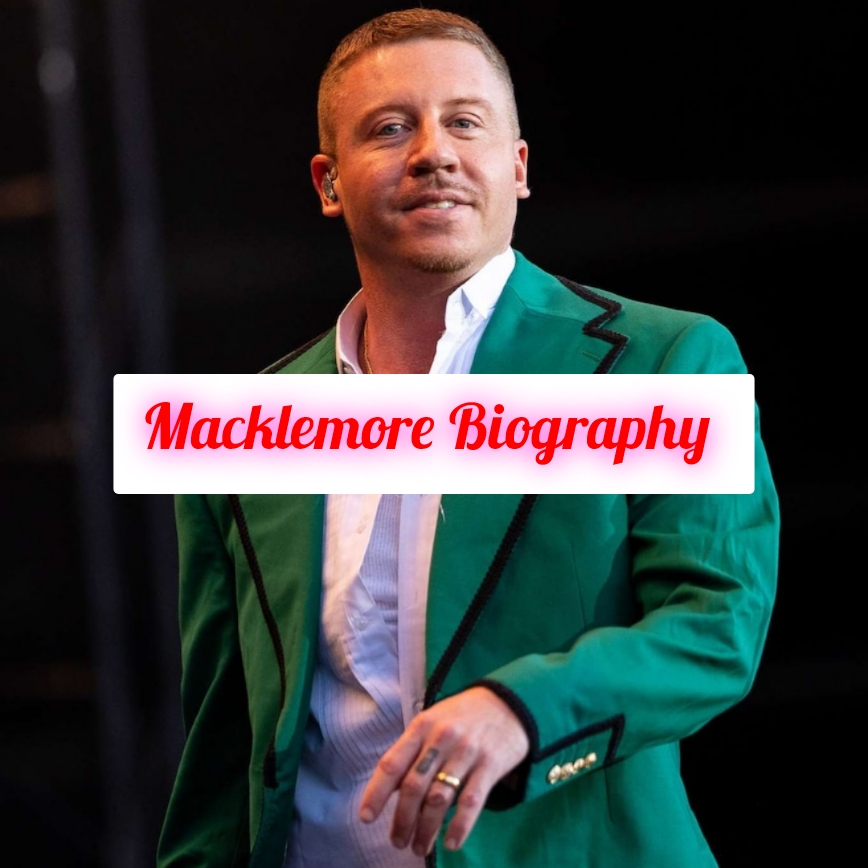
Macklemore Biography
Macklemore has built a distinctive career as an independent-minded American rapper and songwriter who achieved global commercial success while consistently addressing personal struggles and social issues through his music. From his Seattle roots, he developed a style that mixes accessible pop-rap hooks with reflective lyrics on consumerism, identity, recovery, and equality, first rising to prominence through his partnership with producer Ryan Lewis before continuing as a solo artist.
His work has connected with large audiences through chart-topping singles and albums released largely outside traditional major-label structures, while his public advocacy on topics ranging from marriage equality to racial dynamics and more recent humanitarian concerns has kept him in cultural conversations beyond pure entertainment.
Benjamin Hammond Haggerty was born in Seattle, Washington, United States, and is an American national.
Macklemore Early Life
Benjamin Hammond Haggerty was born on June 19, 1983, in Seattle, Washington. He grew up primarily in the city’s Capitol Hill neighborhood with his younger brother Tim. His parents are Bill Haggerty and Julie Schott. The family has Irish heritage, and he was raised in the Catholic tradition.
Hip-hop entered his life early. At the age of six he first heard Digital Underground on the radio, an encounter that sparked a lasting interest in the genre. As a teenager he immersed himself in East Coast underground hip-hop, drawing influence from groups and artists such as Hieroglyphics, Freestyle Fellowship, Aceyalone, Living Legends, Wu-Tang Clan, Mobb Deep, Nas, and Talib Kweli. By age fifteen he had begun writing his own lyrics.
He attended Garfield High School and later Nathan Hale High School in Seattle. At Nathan Hale he created the stage name Professor Macklemore for an art class project that involved inventing a superhero character. At Garfield he formed a student hip-hop group called Elevated Elements, which released an album titled Progress around 2000. During this period he also participated in the Gateways for Incarcerated Youth program, leading music workshops as a way to connect with younger people through creative expression.
After high school he spent a year at the College of Santa Fe in New Mexico. He has described that time as pivotal for developing his rapping skills, even though he was not accepted into the formal music program. He returned to Washington state and later enrolled at The Evergreen State College in Olympia, where he earned a bachelor’s degree in 2009. While at Evergreen he continued community-oriented work through educational and cultural identity programs focused on youth.
Throughout his youth and early adulthood he also contended with substance use that would later become a significant part of his public story. These early experiences in Seattle’s diverse neighborhoods, combined with his creative experiments and community involvement, formed the foundation for both his artistic voice and his later emphasis on authenticity and social awareness.
Macklemore Personal Life
Macklemore has maintained a relatively private personal life centered on family while remaining open about his challenges with addiction. He began a relationship with Tricia Davis around 2006. The couple became engaged in January 2013 and married on June 27, 2015. Davis has worked in various capacities connected to his career, including tour and merchandise management at different points.
They have three children. Their first daughter, Sloane Ava Simone Haggerty, was born on May 29, 2015. A second daughter, Colette Koala Haggerty (often called Coco), arrived in March 2018. Their son, Hugo Jack Haggerty, was born on July 30, 2021. Fatherhood has been a recurring theme in his music and public comments. He has spoken about the profound impact of becoming a parent on his sense of responsibility and his commitment to recovery.
Macklemore has been candid about his struggles with alcohol and drug addiction. He entered rehabilitation in August 2008. He achieved periods of sobriety, including several years after treatment, but has also experienced relapses, including one he addressed in the song “Starting Over.” He has continued to participate in recovery practices and has used his platform to discuss the realities of addiction, the importance of reducing stigma, and the need for accessible help. In 2016 he appeared in a weekly address with then-President Barack Obama focused on the dangers of opioid and prescription painkiller addiction, sharing elements of his own experience.
He has longstanding ties to Seattle and has remained connected to the city through performances, community involvement, and local investments. In recent years he and his wife joined ownership groups associated with Seattle professional sports teams, reflecting a continued attachment to his hometown.
Macklemore Age
As of 2026, Macklemore is 43 years old. He was born on June 19, 1983.
Macklemore Education
Macklemore’s formal education took place in Seattle public schools and Washington state higher education institutions, with a brief interlude in New Mexico. He attended Garfield High School, known for its strong arts and music traditions and as the alma mater of notable musicians, and later Nathan Hale High School. These years included both creative experimentation and personal challenges related to substance use that prompted a change in schools.
After high school he enrolled for one year at the College of Santa Fe. Although he was not admitted to the music program, he has credited the environment and the time away from Seattle with helping him improve as a rapper and develop greater focus on his craft. He then returned to Washington and completed a bachelor’s degree at The Evergreen State College in Olympia in 2009. Evergreen’s interdisciplinary approach aligned with his interests in education, cultural identity, and community work. During his college years he facilitated music workshops through the Gateways for Incarcerated Youth program, blending his artistic development with outreach to younger people facing difficult circumstances.
This combination of formal study and hands-on community engagement shaped both his independent approach to music and his later emphasis on using his platform for broader conversations.
Macklemore Career
Independent Releases and Local Development
Macklemore began releasing music independently in 2000 under the name Professor Macklemore with the mixtape Open Your Eyes, which he distributed himself. He later dropped “Professor” from the stage name. In January 2005 he released his first full-length album, The Language of My World. The project featured tracks that already explored themes of identity, privilege, and personal experience, including an early song titled “White Privilege.” It helped him build a dedicated local following in the Seattle area. He performed regularly at regional events and festivals such as Bumbershoot.
In 2009 he released The Unplanned Mixtape, which reached the upper ranks of the iTunes Hip-Hop chart. Singles from this period included “The Town” and “And We Danced.” Throughout these years he performed extensively in the Pacific Northwest while refining his craft outside major-label systems.
Collaboration with Ryan Lewis
Macklemore first met producer and photographer Ryan Lewis in 2006. Their professional partnership formalized in 2009 as the duo Macklemore & Ryan Lewis. They released The VS. EP that year and followed with VS. Redux in 2010. Early collaborative tracks such as “Wings” and “Can’t Hold Us” (featuring Ray Dalton) began generating wider attention.
Their breakthrough came with the independent album The Heist, released on October 9, 2012. Distributed with support from ADA while allowing the artists to retain significant control, the album debuted at number 2 on the Billboard 200. Key singles included “Thrift Shop” (featuring Wanz), which reached number 1 on the Billboard Hot 100 and became a massive commercial success, and “Can’t Hold Us,” which also topped the Hot 100. “Same Love” (featuring Mary Lambert) addressed marriage equality and became closely associated with advocacy efforts around that issue. The album’s success was notable for occurring largely without traditional major-label backing.
The duo’s second album, This Unruly Mess I’ve Made, arrived on February 26, 2016. It included the lengthy and reflective track “White Privilege II” (featuring Jamila Woods), which examined racial dynamics and the position of a white artist within hip-hop culture. Other singles from this era included “Downtown.” The partnership entered a hiatus around 2017, though the two have collaborated on occasional later projects.
Major albums and songs from the collaborative period and related work include:
- The Heist (2012)
- This Unruly Mess I’ve Made (2016)
- “Thrift Shop”
- “Can’t Hold Us”
- “Same Love”
- “White Privilege II”
- “Downtown”
Solo Career
After the duo’s primary collaborative period, Macklemore returned to solo work. In June 2017 he released the single “Glorious” (featuring Skylar Grey), followed by other tracks such as “Marmalade” (featuring Lil Yachty) and “Good Old Days” (featuring Kesha). His second solo studio album, Gemini, was released on September 22, 2017, and peaked at number 2 on the Billboard 200.
He continued releasing singles in subsequent years, including “Next Year” (2021, with involvement from Ryan Lewis), “Chant” (with Tones and I), “Maniac,” “Faithful” (featuring NLE Choppa), and “Heroes” (featuring DJ Premier). His third solo studio album, Ben, was released on March 3, 2023, and reached number 18 on the Billboard 200.
In May 2024 he released “Hind’s Hall,” a protest song supporting university campus demonstrations related to Palestine, with proceeds directed toward humanitarian efforts. A follow-up version appeared later. In 2026 he joined Ed Sheeran’s Loop Tour as an opening act. After performing and speaking in support of Palestinian causes during a September 2026 show, he was removed from the remaining dates amid pressure from certain venue owners and related parties. He subsequently announced the donation of his net earnings from the tour, reported as one million dollars, to organizations supporting Palestinians.
Throughout his career Macklemore has maintained an independent orientation, using his own imprint and distribution arrangements that prioritize artistic control. His live performances have ranged from small Seattle venues to major international festivals and arena tours.
Macklemore Family
Macklemore’s immediate family includes his parents, Bill Haggerty and Julie Schott, and his brother Tim Haggerty. He has spoken of close relationships with extended family as well, including celebrating his grandmother Helen Schott’s 100th birthday, an occasion reflected in the video for “Glorious.”
His own family with Tricia Davis forms a central part of his adult life. The couple’s three children—Sloane, Colette, and Hugo—have influenced both his personal priorities and his creative output. Songs such as “Growing Up (Sloane’s Song)” directly address fatherhood. He has described parenthood as one of his greatest sources of pride and motivation, while also noting that recovery and personal accountability remain individual responsibilities that family support can encourage but not replace.
The family has generally kept detailed private life out of the public eye while allowing occasional shared moments that underscore the role of home and children in his ongoing work.
Macklemore Philosophy
Macklemore’s public philosophy centers on authenticity, recovery, and the responsible use of a platform. He has repeatedly framed music as a means of expressing values and connecting with listeners on issues that extend beyond entertainment. Early tracks already examined white privilege within hip-hop culture. Later work expanded this inquiry, most notably in “White Privilege II,” which grappled with systemic racism, cultural appropriation, and the obligations of those who benefit from existing structures.
Support for LGBTQ rights found clear expression in “Same Love,” released at a time when marriage equality was still contested in many places. The song and related performances, including a high-profile Grammy Awards appearance that featured a mass wedding ceremony, positioned him as an ally on that issue.
Addiction and recovery form another consistent thread. He has described the daily work of sobriety, the value of 12-step practices and community support, and the damage caused by stigma. His willingness to discuss relapse and the ongoing nature of the process has been part of a broader effort to normalize seeking help.
In more recent years his comments and music have addressed international humanitarian concerns, particularly regarding Palestine. He has framed these statements as consistent with a broader commitment to equality, peace, and the protection of civilian lives. This stance has generated both strong support and significant criticism, illustrating the risks he has been willing to accept when speaking on contested topics.
Across these areas he has emphasized personal responsibility, continuous self-examination, and the idea that silence can itself be a form of action. He has acknowledged limitations in his own perspective while arguing for engagement rather than withdrawal.
Macklemore Achievements
Macklemore’s most visible commercial achievements came through the independent success of The Heist and its singles. “Thrift Shop” and “Can’t Hold Us” both reached number 1 on the Billboard Hot 100, a rare feat for an independent duo’s first two major singles. The album itself sold strongly and achieved multi-platinum certification in the United States and other territories. Gemini also performed well commercially, reaching high chart positions.
Beyond sales and streams, his work has influenced conversations around independent distribution models in hip-hop and the viability of retaining ownership and control. Songs addressing social topics have been used in advocacy contexts and have contributed to public discussion of marriage equality, racial dynamics, and addiction.
His long-term presence in Seattle’s music scene and continued connection to the city, including investments in local sports franchises, represent a form of rooted achievement. Sustained touring and the ability to release music across more than two decades while navigating personal challenges further mark the durability of his career.
Macklemore Awards
At the 56th Annual Grammy Awards in 2014, Macklemore & Ryan Lewis won four awards: Best New Artist, Best Rap Album for The Heist, Best Rap Performance for “Thrift Shop,” and Best Rap Song (associated with the same body of work and related tracks such as “Same Love” in broader recognition of the project). The duo received additional nominations, including for Album of the Year.
They also earned recognition at other ceremonies, including American Music Awards and MTV Video Music Awards for videos and performances connected to The Heist era. These formal honors arrived at the peak of their mainstream visibility and underscored the commercial and critical impact of their independent approach.
Macklemore Current News
In September 2026 Macklemore was removed as an opening act on Ed Sheeran’s Loop Tour after delivering onstage comments and performing material in support of Palestinian causes during a concert at MetLife Stadium. Venue owners and other parties reportedly raised objections that led to the decision. Macklemore publicly addressed the situation, reaffirmed his position, and announced that he would donate the entirety of his net earnings from the tour dates he had already played—reported as one million dollars—to organizations providing support related to Palestine. He invited New England Patriots owner Robert Kraft, who had been among those critical of the comments, to match the donation. Kraft responded by referencing separate humanitarian contributions. The episode generated widespread media coverage, expressions of support from some public figures, and continued debate about artists speaking on geopolitical issues during commercial tours. Around the same period, catalog tracks and recent protest-oriented songs saw increased streaming and sales activity.
Macklemore Net Worth
Public estimates of Macklemore’s net worth commonly place it around 25 million dollars. These figures are third-party assessments rather than audited disclosures and can vary across sources. Income has derived from album and single sales, streaming, touring, merchandise, and related business activities, including the independent ownership model that allowed greater retention of earnings from major releases. He has also made local investments in Seattle-area sports teams. Exact current figures are not publicly verified through official financial statements.
Conclusion
Macklemore’s path from Seattle underground releases to international chart success and continued independent output illustrates both the possibilities and the complexities of building a career on personal terms. His music has delivered mainstream hits while repeatedly returning to questions of identity, recovery, privilege, and social responsibility. The same willingness to address difficult subjects that helped define songs such as “Same Love” and “White Privilege II” has also placed him at the center of recent public controversy. Through family life, ongoing recovery work, and a sustained connection to his hometown, he has maintained a profile that balances commercial achievement with an insistence on speaking about issues he considers important. His catalog and public statements continue to invite listeners to consider the relationship between art, personal accountability, and broader social questions.
FAQs
What is Macklemore’s real name?
Macklemore’s full name is Benjamin Hammond Haggerty. He previously performed as Professor Macklemore before shortening the stage name.
Where was Macklemore born?
He was born in Seattle, Washington, on June 19, 1983, and raised primarily in the Capitol Hill neighborhood of the city.
Is Macklemore married?
Yes. He married Tricia Davis on June 27, 2015, after a relationship that began around 2006.
How many children does Macklemore have?
He and Tricia Davis have three children: daughters Sloane Ava Simone Haggerty (born 2015) and Colette Koala Haggerty (born 2018), and son Hugo Jack Haggerty (born 2021).
What are Macklemore’s most famous songs?
Among his best-known tracks are “Thrift Shop,” “Can’t Hold Us,” “Same Love,” “Glorious,” and more recent releases such as “Hind’s Hall.”
Did Macklemore win Grammy Awards?
Yes. As part of Macklemore & Ryan Lewis he won four Grammy Awards in 2014, including Best New Artist and Best Rap Album for The Heist.
Has Macklemore struggled with addiction?
Yes. He has spoken openly about addiction to alcohol and drugs, entered rehabilitation in 2008, experienced periods of sobriety and relapses, and continues to address recovery in his music and public comments.
What is Macklemore’s connection to Ryan Lewis?
Ryan Lewis is a producer and collaborator with whom Macklemore formed a highly successful duo from roughly 2009 to 2017. Together they released The Heist and This Unruly Mess I’ve Made. They have worked together on occasional projects since the main partnership entered hiatus.
What is Macklemore’s estimated net worth?
Third-party estimates commonly cite a figure around 25 million dollars, though these are not official audited numbers and can differ by source.