Govinda Biography: Net Worth, Career, Education, Personal Life, Awards, Age
Govinda Biography
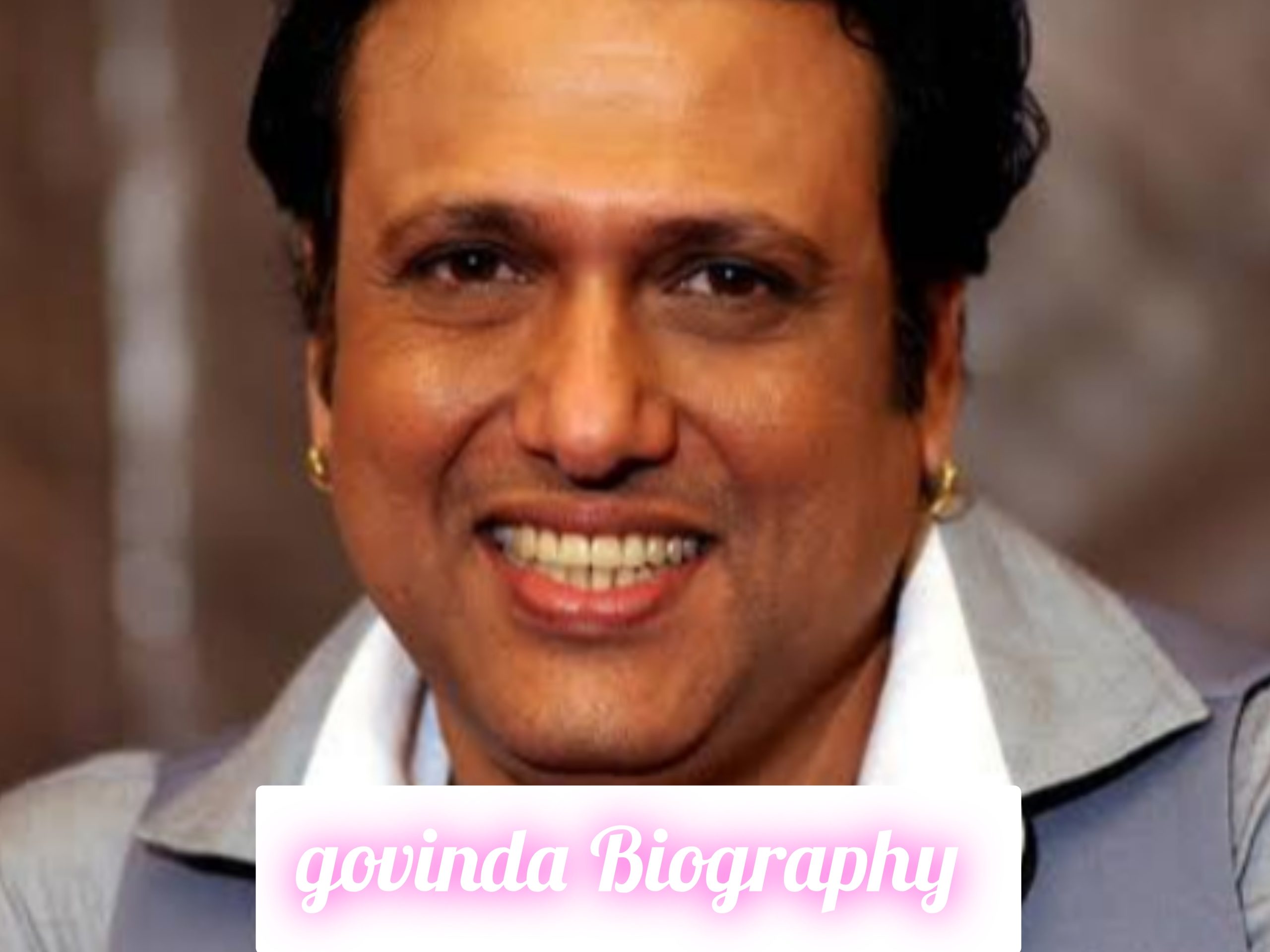
Govinda stands as one of the most recognizable faces in Indian cinema. Born as Govind Arun Ahuja on 21 December 1963, he rose from a modest background in Virar to become a leading actor known for his comic timing and energetic dance style. Over more than three decades, he appeared in over 120 Hindi films. He also served as a Member of Parliament. This biography covers his early years, education, family life, career path, financial standing, public challenges, and lasting influence. The goal is to present clear facts in simple language so readers can understand his journey without confusion.
Govinda earned the nickname Chi Chi from his family and later became known as Virar ka Chokra because of his roots. His story shows how talent, hard work, and timing can turn a young man from the suburbs into a national star. Readers will find details about his films, political roles, and personal milestones based on available public records.
Govinda Early Life
Govinda was born on 21 December 1963 in Virar, then part of Bombay in Maharashtra. His full name is Govind Arun Ahuja. His father, Arun Kumar Ahuja, worked as an actor in Hindi films from the late 1930s onward. Arun appeared in films such as Aurat in 1940 and took both lead and supporting roles over several decades. His mother, Nirmala Devi, was a singer and actress. The family faced financial difficulties after Arun produced a film that did not succeed. They moved from a home on Carter Road in Mumbai to Virar.
Govinda was the youngest of five children. His siblings include brother Kirti Kumar, who later worked as an actor, producer, and director, and sisters Pushpa Anand, Padma Sharma, and Kamini Khanna. Through his father, the family had Punjabi and Sindhi roots. His mother came from a Bhojpuri background linked to Varanasi. Govinda has spoken of identifying more with the Punjabi side of his heritage.
Growing up in Virar shaped his early experiences. The area was quieter and less developed than central Mumbai at the time. Family stories describe a household where film work was familiar but not always stable. These conditions encouraged Govinda to seek opportunities in the same industry his parents had known. He practiced dance moves after watching films and prepared himself for a possible career on screen.
Govinda Education
Govinda completed his early schooling at Annasaheb Vartak Smarak Vidyamandir Primary School in Virar. He later studied at the college level and earned a Bachelor of Commerce degree from Annasaheb Vartak College in Vasai. The commerce education gave him a basic understanding of business and accounts. It was not a film school path. Instead, it provided a practical foundation while he explored acting.
During his student years, the 1982 film Disco Dancer left a strong impression on him. He practiced dance sequences for long hours. He also circulated a promotional video cassette of his skills. These steps helped him move from education into the film industry. His formal studies ended with the commerce degree, after which acting became the main focus.
Govinda Personal Life
Govinda married Sunita Ahuja on 11 March 1987. At the time of the wedding he was 24 and she was 18. The marriage was kept private for several years. Public confirmation came later, around the time their first child was born. The couple has two children. Their daughter, Tina Ahuja, was born in 1989 and later appeared in films including Second Hand Husband in 2015. Their son, Yashvardhan Ahuja, was born in 1997. He has trained in acting and filmmaking and has worked as an assistant director.
Govinda stands approximately 5 feet 7 inches to 5 feet 8 inches tall. He has been described as down to earth by many colleagues. Family life has remained a steady part of his public image even as his career moved between films and politics. In recent years, public discussions around the marriage appeared in media reports. As of August 2026, reports indicated that a divorce petition filed by Sunita Ahuja had been withdrawn. These matters remain personal and are noted here only as reported public events with dates.
Govinda has spoken in interviews about the importance of family support during his early career struggles. His children have pursued paths connected to entertainment while maintaining relatively private profiles compared to their father.
Govinda Net Worth
Public estimates of Govinda’s net worth have varied across sources over the years. Figures commonly cited in recent reports range between 150 crore and 170 crore rupees. These numbers draw from income through film fees, brand endorsements, and real estate holdings. Exact current figures are not publicly verified in official filings available for this summary.
Reported assets include a sea facing bungalow in the Juhu area of Mumbai, often referred to as Jal Darshan or similar names in media coverage, valued in past reports around 16 crore rupees. Additional properties in areas such as Madh Island, Kolkata, and farmland holdings have also been mentioned in lifestyle features. Income sources in earlier years included fees of several crore rupees per film during peak periods and payments for endorsements.
Net worth figures change with market conditions, property values, and ongoing work. Readers should treat published estimates as approximate rather than confirmed financial statements. Govinda’s earnings reflect a long career that combined high volume film work in the 1990s with later selective projects and political involvement.
Govinda Career
Govinda began his film career in 1986. His early releases included Ilzaam, in which he appeared with established actors Shashi Kapoor and Shatrughan Sinha, and Love 86. Tan Badan, directed by his uncle, also came out around the same period. These films performed well enough at the box office to establish him as a new face.
In the late 1980s he took roles in family dramas and action films. Titles from this phase include Khudgarz, Hatya, Dariya Dil, Swarg in 1990, and Hum in 1991 alongside Amitabh Bachchan and Rajinikanth. He worked with director David Dhawan for the first time on the action film Taaqatwar in 1989. That partnership later became central to his success.
The early 1990s marked a clear shift toward comedy. Shola Aur Shabnam in 1992 showed his comic ability as a young NCC cadet. Aankhen in 1993, in which he played a dual role, became one of the highest grossing films of that year. From then on, collaborations with David Dhawan produced a string of commercial successes. These include Raja Babu in 1994, Coolie No. 1 in 1995, Saajan Chale Sasural in 1996, Hero No. 1 in 1997, Deewana Mastana in 1997, Bade Miyan Chote Miyan in 1998 with Amitabh Bachchan, Haseena Maan Jaayegi in 1999, and Jodi No. 1 in 2001.
Other notable films outside the main Dhawan partnership include Dulhe Raja in 1998. Govinda often played energetic, mischievous characters who used dance and physical comedy. Songs from these films gained lasting popularity. In June 1999, a BBC News Online poll ranked him among the top stars of stage or screen over the previous thousand years.
The early 2000s brought a quieter period with several films that did not perform strongly. He returned with Bhagam Bhag in 2006 and Partner in 2007, the latter co starring Salman Khan. Later credits include Holiday in 2014. In 2015 he served as a judge on the television show Dance India Dance Super Moms.
Parallel to films, Govinda entered politics. In 2004 he contested the Lok Sabha election from Mumbai North on an Indian National Congress ticket and won. He served as Member of Parliament from 2004 to 2009. In 2009 he stepped away from active politics to focus on films. In 2024 he joined the Shiv Sena led by Eknath Shinde.
Across more than 120 films, Govinda received multiple Filmfare Award nominations. He won the Filmfare Award for Best Comedian for Haseena Maan Jaayegi and Filmfare Special Awards for other work including Saajan Chale Sasural. His career shows repeated adaptation from action and drama to comedy and then to selective later roles.
Govinda Controversies
Public attention has occasionally focused on professional and personal matters. In the early 2000s, a series of films that underperformed led to discussion about career direction. Govinda himself addressed the period in interviews, noting a desire to move away from certain comedy formulas at one point while continuing to work in the genre.
Media coverage has also included reports about his marriage. In 2026, reports stated that Sunita Ahuja had filed a divorce petition and later withdrew it. These developments were covered by news outlets with reference to court appearances and statements from representatives. No further verified legal outcomes beyond the withdrawal reports are included here.
Govinda has generally avoided prolonged public disputes. When asked about past rumors involving co stars in earlier decades, he has responded in interviews by emphasizing professional boundaries and family commitments. Career related delays on film sets earned him a reputation for lateness among some directors, a point he has acknowledged in past conversations. These topics appear in public records as reported events rather than unresolved claims.
Govinda Legacy
Govinda’s main contribution lies in popularizing a specific style of light hearted, dance driven comedy in the 1990s. Films such as Coolie No. 1, Hero No. 1, and Partner remain widely watched on television and digital platforms. His physical comedy and freestyle dance sequences influenced later performers who aimed for mass appeal.
He helped establish the template of the comic hero who wins audiences through energy and timing rather than intense drama. Collaborations with David Dhawan created a recognizable body of work that defined a decade for many viewers. Songs from his films continue to appear in celebrations and media montages.
Beyond cinema, his term as Member of Parliament from Mumbai North added a political dimension. The 2024 association with Shiv Sena shows continued public engagement. Family members including his children have entered entertainment fields, extending the connection to films across generations.
Govinda’s career illustrates the value of reinvention. He moved from early action roles to comedy stardom, faced quieter years, and returned with successful projects. For audiences who grew up in the 1990s, his films represent a particular era of accessible entertainment. Newer viewers discover the same titles through streaming and often note the lasting appeal of the humor and music.
Conclusion
Govinda’s path from Virar to the center of Hindi cinema and into politics offers a clear example of sustained effort over decades. Born in 1963, he debuted in 1986, peaked as a comedy star in the 1990s, served in Parliament from 2004 to 2009, and remains active in public life. His marriage to Sunita Ahuja since 1987 and the presence of their two children form the personal foundation of the story.
The films, awards, and public roles together create a record of contribution to Indian popular culture. Readers can explore the listed titles and public records for further detail. This account has focused on verified dates, names, and outcomes to provide a straightforward reference.
FAQs
What is Govinda’s full name and date of birth?
Govind Arun Ahuja was born on 21 December 1963 in Virar, Maharashtra.
Who are Govinda’s parents?
His father was actor Arun Kumar Ahuja and his mother was singer actress Nirmala Devi.
When did Govinda marry and who is his wife?
He married Sunita Ahuja on 11 March 1987.
How many children does Govinda have?
He has two children, daughter Tina Ahuja born in 1989 and son Yashvardhan Ahuja born in 1997.
What was Govinda’s first film?
His early releases in 1986 included Ilzaam and Love 86.
Which director worked most often with Govinda on comedy films?
David Dhawan directed many of his successful comedy films including Coolie No. 1, Hero No. 1, and Partner.
Did Govinda serve in politics?
Yes. He was elected Member of Parliament from Mumbai North in 2004 on an Indian National Congress ticket and served until 2009. In 2024 he joined Shiv Sena.
What awards has Govinda won?
He received the Filmfare Award for Best Comedian for Haseena Maan Jaayegi and Filmfare Special Awards for other performances. He earned multiple nominations across award ceremonies.
What is known about Govinda’s net worth?
Media estimates in recent years have placed it in the range of 150 to 170 crore rupees, based on films, endorsements, and property. Exact figures are not officially confirmed in public sources used here.
Why is Govinda called Chi Chi or Virar ka Chokra?
Chi Chi was a family nickname meaning little finger in Punjabi. Virar ka Chokra refers to his upbringing in Virar.