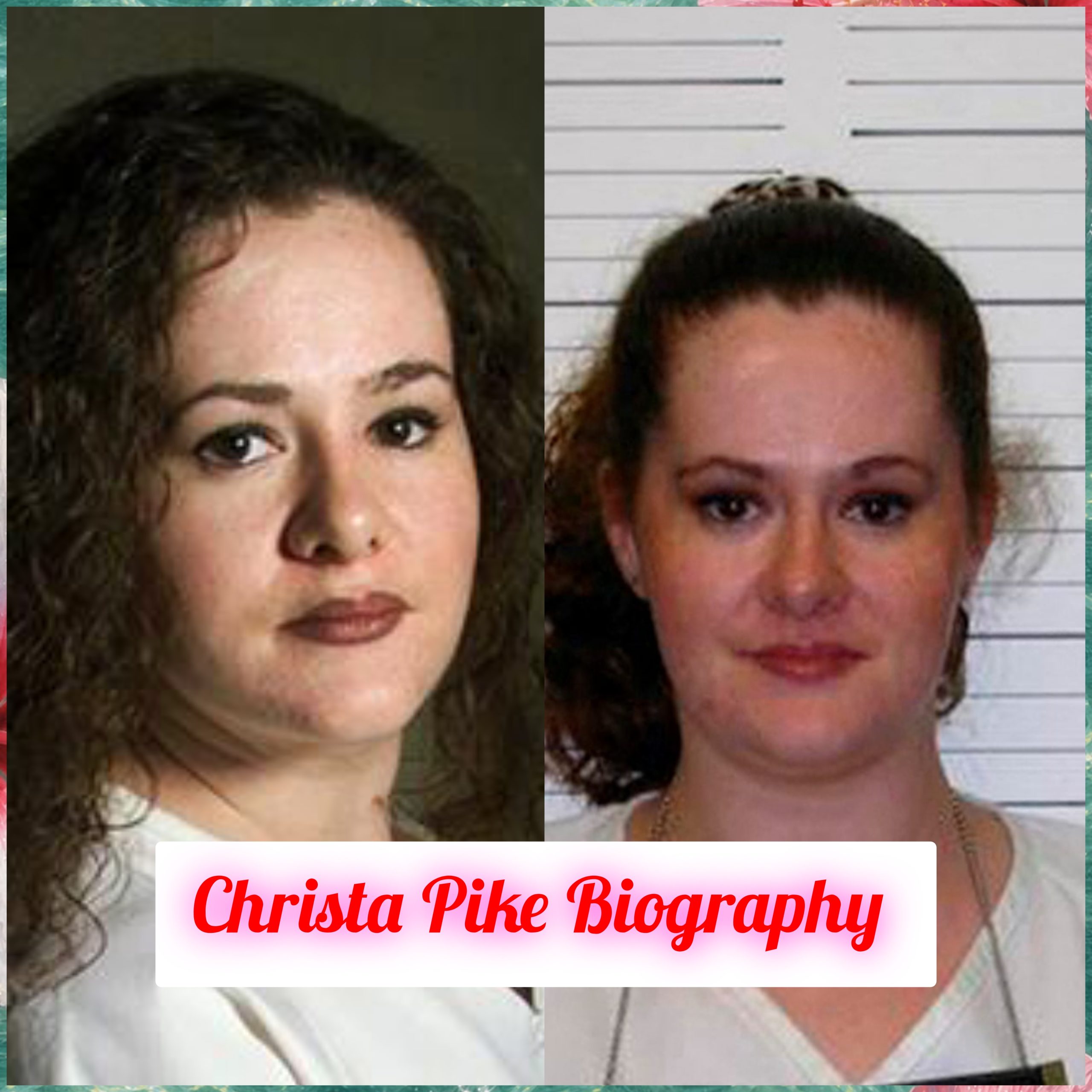
Christa Pike Biography: Personal Life, Age, Early Life, Education, Career, Family, Awards, Philosophy, Achievements, Legacy, Net Worth
Christa Pike Biography
Christa Gail Pike stands as a complex figure in American criminal justice history, known primarily for a crime committed in her late teens that led to one of the most severe sentences possible under United States law. Her case has drawn sustained attention over decades because of the young age at which she acted, the circumstances of her upbringing, and the long legal process that followed her conviction. Public discussion has often focused on questions of accountability, the effects of childhood trauma, and the application of capital punishment to people who offend as emerging adults.
Full name: Christa Gail Pike. Place of birth: Beckley, West Virginia. Nationality: American.
Christa Pike Early Life
Christa Gail Pike was born on March 10, 1976, in Beckley, West Virginia. She arrived two months prematurely by cesarean section. Her mother was Carissa Hansen and her father was Emil Glenn Pike. The family background included frequent instability, substance use, and interpersonal conflict. Pike’s early years involved multiple moves between West Virginia and North Carolina as her parents’ relationship shifted through marriage, separation, remarriage, and further disruption.
Accounts from relatives and later psychological evaluations describe an environment of neglect. One aunt recalled that as an infant Pike sometimes crawled through areas of the home that were unsanitary. Her mother continued social activities even after learning that the toddler experienced seizures. Pike’s paternal grandmother, Delfa Clark Pike, provided significant care and was later described by Pike as the only consistent source of affection in her childhood. The grandmother’s death when Pike was twelve contributed to a period of severe distress. Pike attempted suicide around that time by overdosing on medication and received limited follow-up support from her parents.
Sexual abuse formed a documented part of her early history. Reports indicate abuse beginning at a very young age involving a companion of her grandmother. At age eleven she was raped by a neighbor; the man was later arrested after a teacher reported the incident and served a short sentence. Additional assaults occurred in her mid-teens, including one by a stranger when she was seventeen. Her mother’s partners also subjected her to physical and sexual violence. Social services temporarily removed her from the home on at least one occasion because of abuse by a live-in boyfriend, yet she was returned after a short period with limited ongoing intervention.
Pike changed schools repeatedly because of the family’s moves and disruptions. Despite evidence of average to above-average intelligence on standardized testing, her academic performance declined. She failed the seventh grade. By the tenth grade she had accumulated disciplinary issues. In 1991, at age fifteen, she was placed on probation after breaking into a community center to steal candy. When she violated the terms of probation she was sent to the Juvenile Evaluation Center in Swannanoa, North Carolina. She remained there longer than most residents, earning her General Educational Development credential and serving as a teacher’s assistant. Counselors later described her as intelligent and open to growth despite behavioral difficulties rooted in trauma. She left the center in 1993.
Christa Pike Personal Life
Pike’s personal relationships before incarceration were marked by instability and, in some cases, violence. After leaving the juvenile center she enrolled in the Job Corps program in Knoxville, Tennessee, seeking vocational training. There she began a relationship with Tadaryl Shipp, who was a year younger. The relationship included elements of mutual interest in occult imagery and periods of physical abuse directed at Pike by Shipp. She later described feeling protected by him in ways she had not experienced before, even while acknowledging the violence.
She maintained limited contact with her parents after her arrest and conviction. Interviews conducted years later indicated that she spoke with them by telephone on a regular weekly schedule. No records indicate marriage or children. In prison she developed correspondences with individuals outside, one of which became central to an escape plot in 2012. That correspondence involved a New Jersey man who visited her and, along with a corrections officer, participated in planning that was later discovered and prosecuted.
In later years Pike identified as Buddhist. She requested the presence of a Buddhist spiritual adviser during the period leading up to her scheduled execution in 2026 and raised legal challenges related to the free exercise of her religious beliefs in the context of the execution process. She has expressed interest in art, producing drawings and paintings while incarcerated. Visitors and supporters have described her as someone who offers small gestures of support to other inmates, such as welcoming gifts of coffee.
Christa Pike Age
As of October 2026 Christa Pike is fifty years old. She was born on March 10, 1976. She was eighteen at the time of the offense that led to her capital sentence and twenty when the jury imposed that sentence in March 1996. She has spent the entirety of her adult life in custody.
Christa Pike Education
Pike’s formal schooling was interrupted by frequent moves and family instability. She attended multiple schools across West Virginia and North Carolina. Despite indicators of cognitive ability in the upper range for her age on certain tests, she struggled with consistent performance and failed at least one grade. She did not complete a traditional high school diploma.
While at the Juvenile Evaluation Center in Swannanoa she earned her General Educational Development credential. She also worked as a teacher’s assistant at the facility. Upon release she entered the Knoxville Job Corps Center with the stated goal of training as a nursing assistant or nurse, an aspiration influenced by her mother’s later work in nursing. The Job Corps program provided vocational instruction and residential structure for disadvantaged youth. Pike was enrolled there at the time of the 1995 offense. No further formal education or degrees are recorded after her incarceration.
Christa Pike Career
Pike has no conventional professional career. Her only structured vocational experience occurred within the Job Corps program, where she pursued training related to nursing. That path ended with her arrest in January 1995.
Christa Pike Involvement in the 1995 Offense
On January 12, 1995, Pike, then eighteen, along with Tadaryl Shipp and Shadolla Peterson, lured nineteen-year-old Colleen Slemmer to a wooded area near the University of Tennessee agricultural campus in Knoxville. Slemmer was a fellow Job Corps student. The stated pretext involved offering marijuana and resolving personal tensions. Once isolated, Pike and Shipp attacked Slemmer while Peterson acted as a lookout. The assault lasted approximately thirty minutes and involved beating, slashing with a box cutter and other implements, and carving a pentagram into Slemmer’s chest. Pike delivered a fatal blow with a large piece of asphalt. She retained a fragment of Slemmer’s skull. The body was discovered the following morning by university grounds staff.
Pike confessed shortly after the discovery and showed the skull fragment to other students. She was arrested on January 14, 1995. At trial in March 1996 a Knox County jury convicted her of premeditated first-degree murder and conspiracy to commit first-degree murder. The jury found two statutory aggravating circumstances: that the murder was especially heinous, atrocious, or cruel involving torture or serious physical abuse beyond that necessary to produce death, and that it was committed to avoid or prevent lawful arrest or prosecution. On March 30, 1996, the court sentenced her to death for the murder and to a consecutive twenty-five-year term for the conspiracy conviction. Shipp, who was seventeen at the time of the offense, received a life sentence. Peterson pleaded guilty to being an accessory and received probation.
Christa Pike 2001 Offense and Subsequent Proceedings
On August 24, 2001, while housed at the Tennessee Prison for Women, Pike used a shoestring to strangle fellow inmate Patricia Jones during a period when several women had been moved to a recreation cage because of a fire. Jones lost consciousness. Pike later stated that she acted to protect another inmate, Natasha Cornett, with whom Jones was arguing. A jury convicted Pike of attempted first-degree murder in 2004 and imposed an additional twenty-five-year sentence.
In 2012 authorities uncovered an escape plan involving Pike, a New Jersey correspondent named Donald Kohut, and a corrections officer, Justin Heflin. The plan included attempts to obtain or duplicate a prison key. The plot was disrupted before any escape occurred. Details remain limited in public records because of security considerations.
Pike has remained on death row at facilities including the Debra K. Johnson Rehabilitation Center. For many years she was held under maximum-security conditions that included extended solitary confinement. In 2022 she filed a lawsuit alleging unequal conditions relative to male death-row inmates. A settlement in 2024 altered some aspects of her confinement.
Christa Pike Family
Pike’s immediate family consists of her parents, Carissa Hansen and Emil Glenn Pike, and several half-siblings. She shares a mother with an older half-sister, Alicia. She shares a father with a younger half-sister, Lindsay, and a half-brother, Max, who died in 2015. Relations with half-siblings have been distant in adulthood. Pike has described limited but ongoing telephone contact with her parents while incarcerated.
Extended family history includes patterns of substance use, violence, and instability on both maternal and paternal sides. Her maternal grandfather operated a meat-processing business, and Pike later recalled exposure to animal slaughter as a child. Psychological evaluations prepared for post-conviction and clemency proceedings have documented multi-generational trauma within the family.
Christa Pike Philosophy
Pike has not published formal philosophical writings. In later years she has identified with Buddhist practice. She requested a Buddhist spiritual adviser in connection with her scheduled 2026 execution and raised claims that certain procedural requirements interfered with the free exercise of her religious beliefs. Statements attributed to her in interviews and legal filings emphasize personal responsibility for the 1995 offense, regret for the harm caused to Colleen Slemmer’s family, and a sense of having changed substantially since her late teens. She has described herself as no longer the person who committed the crime and has expressed a desire to be useful to others within the constraints of incarceration. Supporters and some clinicians have characterized her later outlook as one that prioritizes accountability alongside recognition of untreated mental illness and trauma present at the time of the offense.
Christa Pike Achievements
Pike’s record does not include conventional professional or public achievements. Within the constrained environment of long-term incarceration she has pursued art, producing drawings and paintings. She has been described by some visitors and fellow inmates as offering practical support to newer residents. She completed her GED while in the juvenile system and served as a teacher’s assistant. Post-conviction psychological treatment, including diagnosis and medication for bipolar disorder beginning around 2021, has been cited by her legal team as contributing to greater emotional stability. These developments form the basis of arguments advanced in clemency and post-conviction proceedings regarding her current character and capacity for reflection.
Christa Pike Awards
No verified awards or formal honors are associated with Christa Pike’s life or activities.
Christa Pike Current News
As of early October 2026, Christa Pike remains alive following a failed execution attempt on September 30, 2026, at Riverbend Maximum Security Institution in Nashville. Tennessee authorities administered two doses of pentobarbital under the state’s single-drug lethal-injection protocol. Pike did not lose consciousness and was later described by her attorneys as still having a heartbeat and audibly snoring. She was transported to a hospital in critical condition. Subsequent court filings stated that she was unconscious, intubated, and on a ventilator, with both arms swollen, blistered, and burned. Governor Bill Lee ordered a pause on further executions for the remainder of 2026 and directed a third-party review of the incident. Pike’s attorneys have renewed calls for commutation of her sentence. She continues to be the only woman on Tennessee’s death row. If the sentence were carried out in the future she would be the first woman executed in the state in more than two hundred years.
Conclusion
Christa Pike’s life traces a path from a childhood defined by neglect, abuse, and instability in Appalachia through a violent crime committed at age eighteen and into three decades of incarceration under a death sentence. The 1995 killing of Colleen Slemmer remains the central fact of her public identity. Courts have repeatedly upheld her conviction and sentence while her legal teams have presented extensive evidence of fetal alcohol effects, untreated bipolar disorder, post-traumatic stress, and multiple childhood sexual assaults that were not fully developed before the original jury. Later years have included additional criminal convictions inside prison, an escape plot, prolonged solitary confinement, artistic activity, and an embrace of Buddhist practice. The September 2026 execution attempt, which left her in critical condition, has intensified public and legal scrutiny of both her case and Tennessee’s capital procedures. Her story continues to raise difficult questions about youth, trauma, culpability, and the administration of the death penalty in the United States.
FAQs
Who is Christa Pike?
Christa Gail Pike is an American woman born in 1976 who was convicted in 1996 of the first-degree murder of Colleen Slemmer and sentenced to death. She remains on death row in Tennessee.
When and where was Christa Pike born?
She was born on March 10, 1976, in Beckley, West Virginia.
What crime led to Christa Pike’s death sentence?
On January 12, 1995, at age eighteen, she participated in the torture and killing of nineteen-year-old Colleen Slemmer, a fellow Job Corps student in Knoxville, Tennessee. She was convicted of premeditated first-degree murder and conspiracy.
How old was Christa Pike when she committed the offense?
She was eighteen years old.
Has Christa Pike been involved in other crimes while incarcerated?
Yes. In 2001 she was involved in an attack on fellow inmate Patricia Jones that led to a 2004 conviction for attempted first-degree murder and an additional twenty-five-year sentence. In 2012 authorities uncovered an escape plot involving her, a civilian correspondent, and a corrections officer.
What is known about Christa Pike’s childhood?
Multiple sources, including psychological evaluations prepared for court, document severe neglect, physical abuse, sexual abuse beginning at a young age, multiple rapes, frequent moves, parental substance use, and a suicide attempt at age twelve following her grandmother’s death. She earned a GED while in a juvenile facility.
What is Christa Pike’s current status?
As of early October 2026 she is alive and in critical condition after a failed lethal-injection attempt on September 30, 2026. Tennessee has paused further executions pending review.
Does Christa Pike have any children or a spouse?
No public records indicate that she has married or has children.
What religion does Christa Pike practice?
In recent years she has identified as Buddhist and has sought the involvement of a Buddhist spiritual adviser in connection with her case.